Merry Christmas from the Woodruffs

Emory colleagues Kathryn Dixson and Gretchen Warner have a gift for making material from the archives more eye-catching than a Macy’s store window on 34th Street. They design and mount exhibits in Emory’s Rose Library and Schatten Gallery, and for the last couple of years they have graciously added to their work the display case on the first floor of the Administration Building.

Two weeks ago, in time for the holidays, Kathy and Gretchen created a display of the beautiful Christmas cards that Emory philanthropist Robert Woodruff used to send. In case you can’t get to the Administration Building, I share parts of the display here. The photos and cards are from the Robert W. Woodruff collection in the Stuart A. Rose Manuscript, Archives, and Rare Book Library.

Beginning in 1924, the year after Woodruff became president of the Coca-Cola Company, he and his wife, Nell Hodgson Woodruff, sent annual Christmas cards.

woodruffs_web-copy
Robert and Nell Hodgson Woodruff at Ichauway.

Initially graced with holiday images, the cards soon featured photos of Ichauway, the South Georgia plantation the Woodruffs bought in 1929 as a vacation refuge and bird-hunting retreat.

woodruff-christmas-card-1935
The Woodruffs’ Christmas card from 1935, featuring the interior of the lodge at Ichauway.


In 1941, however, the Woodruffs began a new and magnificent holiday tradition featuring the commissioned paintings of Ichauway’s birds by Italian-born artist Athos Menaboni. By the time of Robert Woodruff’s death, in 1985, Menaboni’s paintings would grace the front of 44 Woodruff Christmas cards. A number of reproductions of these paintings are housed along with Menaboni’s papers in the Stuart A. Rose Manuscript, Archives, and Rare Book Library at Emory. The cards themselves are among the Robert W. Woodruff papers in the Rose Library.

menaboni_panels_left_bottom-copy
Examples of Menaboni’s work for the Woodruffs’ Christmas cards.

The card for 1968 bore only Robert’s name on the inside. His beloved Nell had died in January of that year, less than a year after Emory named its school of nursing in her honor. The couple of green-winged teal shown in the card poignantly suggest the long flight of life that Robert and Nell had shared, for more than 55 years.
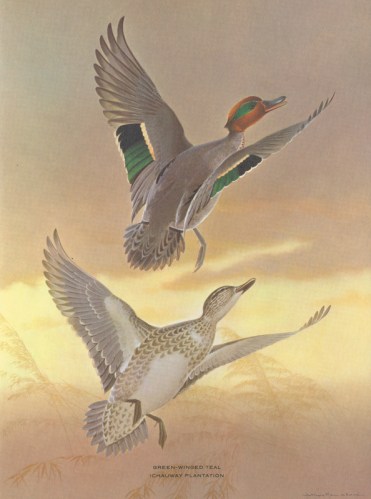
menaboni-1968
1968 Christmas card illustration

The last Woodruff/Menaboni card appeared in 1984, featuring the great blue heron.

menaboni-1984
1984 Woodruff Christmas card.

Woodruff died on March 7, 1985, and Menaboni lived another five years, dying on July 18, 1990, at the age of 94.

In the spirit of beauty and grace reflected in the Menaboni cards sent by the Woodruffs, I take the occasion to wish you a merry Christmas and a peaceful, happy new year.

Gary Hauk
Two heroes at Emory

On December 17 the New York Times carried news of the death of Lawrence Colburn. He was one of three men who stopped the massacre of civilians at My Lai on March 16, 1968, during the Vietnam War. Horrific in scale and shocking in its violation of American values, international law, and basic humanity, the massacre stunned the nation when it came to light. Yet the massacre might have been far worse, but for the heroism of helicopter pilot Hugh Thompson, gunner Larry Colburn, and crew chief Glenn Andreotta.

Charged with using his helicopter to draw enemy fire away from US troops on the ground, Thompson soon realized that the only shooting was being done by Americans, and that something was terribly wrong. He landed his chopper between the troops and helpless civilians, and together he, Colburn, and Andreotta risked their own lives in the face of what can only be described as lunacy and evil.

Thirty-four years later, Emory professor David Blumenthal, the Jay and Leslie Cohen Professor of Judaic Studies, nominated Thompson and Colburn to receive honorary degrees from the University (Andreotta, the third member of the helicopter crew, had been killed in action three weeks after My Lai). Professor Blumenthal has long been an advocate for recognizing those who stand, courageously and sometimes alone, against tall odds in the face of oppression, barbarity, and the trampling of humanity. On May 13, 2002, Thompson and Colburn received the Doctor of Humane Letters degree, honoris causa, while the citation below was read.

The President, Trustees, and Faculty of Emory University

take pleasure in honoring

HUGH THOMPSON and LAWRENCE COLBURN

Heroes and Healers of the Wounds of War:

On a beautiful March morning in 1968,

ordinary people much like us committed unspeakable evil,

but you and your fellow crew member, Glenn Andreotta—

also ordinary people much like us—

transcended fear and chaos to save the lives of the innocents,

and thereby to rescue honor and right and

hope for the human capacity to choose the good.

From among the bodies lying dead in a ditch,

you lifted up a living child, whom now, in his adulthood,

you continue to help toward a fuller, happier existence.

From the cinders of the burning village

and the ruins of the blood-soaked streets,

you lifted up a reminder for us, in a violent and savage world,

that some things are worth risking death for,

many fewer are worth killing for,

and blessed is the heart that knows the difference.

Today we are honored to confer on you

the degree of Doctor of Humane Letters, honoris causa.


Rest in peace, valiant soldier, defender of our humanity. And may the rest of us ordinary people—much like you—rise to the occasion when the defense of humanity calls us.

Gary Hauk

Happy Birthday, Emory

“In 1836, when the Cherokee nation still clung to its ancestral lands in the State of Georgia, and Atlanta itself had yet to be born a year later as the town of Terminus, a small band of Methodists in Newton County dedicated themselves to founding a new town and college. They would call the town Oxford. It was a name of high aspiration, linking their little frontier enterprise with the university attended by the founders of Methodism, John and Charles Wesley. The college they would call Emory, after an American Methodist bishop who had inspired them by his broad vision for what education in America might be. The year before had seen, in France, the appearance of the first part of Alexis de Tocqueville’s Democracy in America. It was Tocqueville’s insight that the American democratic experience rested on the voluntary association, [citizens] coming together in pursuit of the common good, and nothing symbolized his insight better than that company of college founders as they made their plans in the humming Georgia woods.”

—from A Legacy of Heart and Mind: Emory Since 1836

screen-shot-2016-12-10-at-8-13-11-am
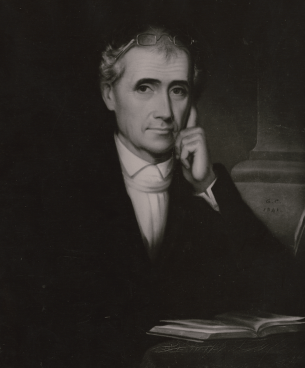
Ignatius Alphonso Few, President of Emory College, 1836–39

One hundred and eighty years to the day since the Georgia Assembly granted a charter to the college on December 10, 1836, Emory University bears as little physical resemblance to its fledgling ancestor as Atlanta does to Terminus. Yet the ideals that motivated the founders still sound in the voices of students, the lectures and seminar discussions led by faculty members, and the daily fulfillment of responsibilities by staff members and administrators–hope for a better future, convictions about the importance of individuals, and the belief that our sometimes wise and sometimes foolish hearts still have the possibility of nurturing knowledge in the hearts and minds of a new generation.

See the “Emory History Minute” about Emory’s original 1836 charter here, number 28 on the menu in the upper left.

Gary Hauk