Emory and “A Perfect Mess”

Stanford professor David F. Labaree, a social historian who writes about education, has published a short and engaging book about American higher education. He sums up his take on the industry with the book’s title–“A Perfect Mess” (University of Chicago Press, 2017). His thesis is that the rise of American colleges and universities to a position of dominance in the ranks of the best in the world could not have been predicted in the  nineteenth century. True, by 1880 the US had five times as many higher ed institutions as all of Europe, and Ohio alone had three times as many as the UK. Yet these American colleges held about as much promise of triumph as a go-cart at the Indy 500.

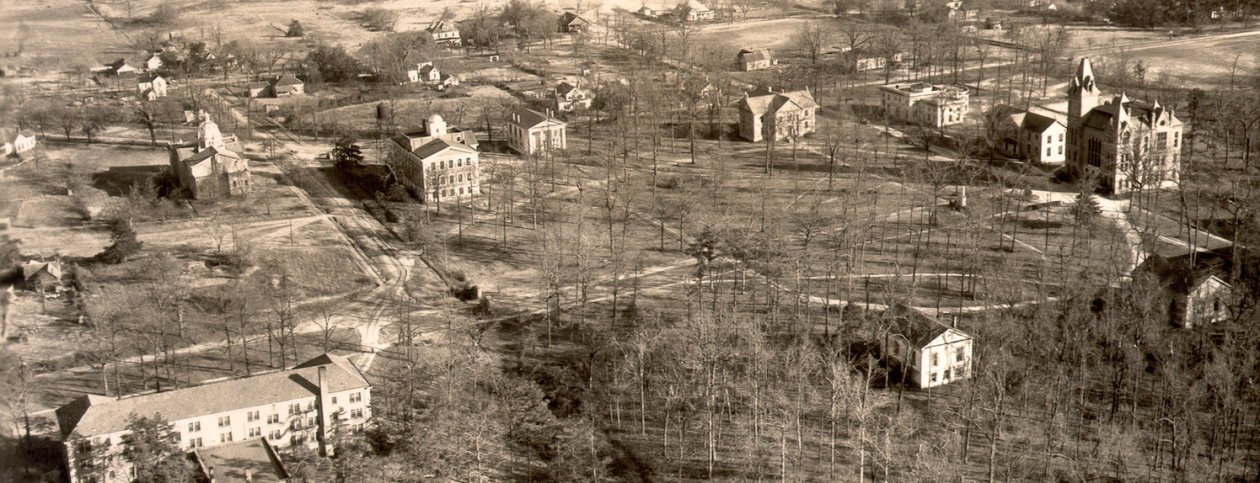
Unsurprisingly, the story of most  American colleges through the nineteenth century sounds like much of the history of Emory back then. Scores of small colleges founded by religious denominations were isolated in rural areas or tiny towns. Presidents and faculty members wrestled with a constant shortage of funds and relatively small enrollments. The faculty often were clergy first and scholars second, many of them having attained little more than a BA degree and rarely a doctorate. As many as half the students failed to graduate, not necessarily for want of brains but for the need to earn a living as farmers, merchants, or even professionals in work that required less formal education in those days (law and ministry especially).

The location of Emory College in little Oxford, Georgia, and then the establishment of Emory University in Atlanta underscore two observations Labaree makes.

The first observation is that the founders of the liberal arts colleges in the nineteenth century often chose rural areas or small towns for their schools out of a belief in republican (small r) values–the integrity and individualism of the small landholder, the family-like ethos of community, the nurturing of civic and religious habits, and a suspicion of the corrupting influence of commercial centers in large cities.

All of these principles seem to have motivated the founders of Emory College, who not only set their college two miles from the center of Covington but also created a new town as a buffer against intruding vices. (Initially each residential lot in the college’s town, Oxford, was offered on a lease of 999 years, with stipulations that the lease would be forfeit if the property were used for games of chance or selling of “spirits.”)

Labaree’s second observation, though, points to a curious and often-unremarked-upon fact about the location of Emory University. He comments that many nineteenth-century colleges were founded by civic boosters who wanted to increase the value of their property. “Settle in East Podunk–we have a college!” I think something of that strategy was at work in Asa Candler in 1914.

By 1914, when the Methodist Episcopal Church, South, was looking for the site for a new university, wariness of city vices still persisted among many Emory supporters, and they made a strong case for keeping the college at Oxford while allowing the university’s new professional schools to take advantage of access to lawyers, doctors, business leaders, and clergy in the city. In the end, the trustees thought it made more sense to have the college and the professional schools on the same campus in Atlanta.

Curiously, though, that campus in Atlanta began with seventy-five acres that Asa Candler carved out of his suburban development in Druid Hills. What better way to ensure the marketability of his massive real estate plan than to carve a bucolic university campus from the woods and fields right next door?

This is not to minimize Candler’s genuine philanthropic impulse or his indispensable largess. But his biographers have always noted that his deep and extended civic engagement with Atlanta, as well as his commitments to church and university, never diminished or got in the way of his always-functioning business savvy. He was ever, in the apt title of Kathryn W. Kemp’s book about him, “God’s capitalist.”

Gary Hauk


The remarkable Sledds of Emory

Last Friday I had the privilege of meeting a descendant of one the makers of Emory history whom we celebrated during the university’s 175th anniversary observance in 2011.

Rebecca Sledd Williams 95C had emailed me weeks earlier to say that her son was looking at colleges and wanted to visit Emory. They would like to meet and hear a bit about the history of the place. Incidentally, she said, she is the great-granddaughter of Andrew Sledd and the granddaughter of James Sledd, Emory College Class of 1936.

The Emory career of Andrew Sledd offers a fascinating study of the risks inherent in the unfettered search for truth.

A graduate of Randolph-Macon College, in his native Virginia, Sledd came to Emory in 1898 with a master’s degree from Harvard. The next year he married Annie Florence “Foncie” Candler, daughter of former Emory president Warren Candler.

screen-shot-2018-04-13-at-9-58-26-am-e1523628026184.png
Prof. Andrew Sledd, center, wearing fedora, appears with the Emory College Bicycle Club in the 1898 Zodiac yearbook of Emory College. Courtesy of Stuart A. Rose Manuscript, Archives, and Rare Book Library.

No doubt all would have gone smoothly in Sledd’s career had it not been for a particularly gruesome lynching near Newnan, Georgia. The story of mob violence against Sam Hose is told in horrific detail by Edwin T. Arnold in What Virtue There Is in Fire (University of Georgia Press, 2009) and in brief at the “New Georgia Encyclopedia” article on lynching.

The sheer barbarity of the incident outraged Sledd, who recognized lynching as a symptom of a wider disregard for the rights of African Americans under the law. In an article published in the Atlantic Monthly in July 1902, Sledd upbraided both northerners and southerners for their attitudes toward African Americans. But he leveled a broadside particularly against southern customs and laws, which effectively dehumanized African Americans. He denounced lynching as the lowest form of immorality and a complete abrogation of humanity.

Such a public stand took courage, and it incurred a swift penalty. Spurred on by Rebecca Latimer Felton, Georgia newspapers and citizens called with self-righteous fury for Sledd’s dismissal from Emory. Sledd sought to save the college’s reputation by resigning. To their everlasting shame, the trustees accepted his resignation. Historian Terry L. Matthews tells the full story here.

Screen Shot 2018-04-13 at 9.22.53 AM
Andrew Sledd, circa 1902

Sledd went on, the next year, to complete his PhD degree in classics at Yale, then became the founding president of the University of Florida (1904–1909) and, from 1910 to 1914, president of Southern University in Alabama.

Emory had an opportunity to redeem itself with respect to Professor Sledd, for when the Candler School of Theology was established in 1914, Sledd was among the first persons appointed to its faculty. As a professor of New Testament studies, he was a vital part of the theological modernism changing Southern Methodism in the 1920s—a liberal perspective that fostered critical thinking about the Bible in the historical context of its writing. When Biblical literalists took him and other Candler faculty to task for their views, the faculty found a defender in none other than Bishop Warren Candler, who was the chancellor of Emory University and as stalwart a bastion of “tradition” as there ever was. It may have helped Sledd that Candler was his father-in-law.

Sledd taught at Candler until his death from a heart attack in 1939. Eight of his nine children graduated from Emory–seven of them with Phi Beta Kappa keys–and two sons went on to academic careers of their own. James Sledd, who would teach English at the University of Chicago and the University of Texas, was one of Emory’s twenty Rhodes Scholars. A couple of letters from him to Professor Thomas H. English, his mentor at Emory, are part of the Thomas English Papers in the Stuart A. Rose Manuscript, Archives, and Rare Book Library.

Bill Chace, president emeritus of Emory, has reminded me that James Sledd also taught at the University of California, Berkeley, where one of his doctoral students was JoAn Chace, a future first lady of Emory and faculty member in the Emory English Department.

Screen Shot 2018-04-13 at 10.08.42 AM
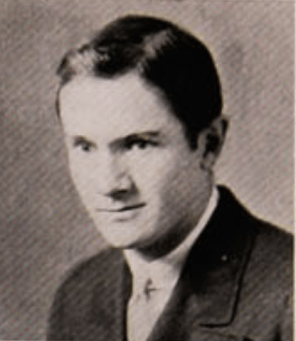
James Sledd, from the 1936 Campus yearbook in the Rose Library.

James was the grandfather of Rebecca Sledd Williams, who traveled from California with her son to see where her grandfather — whom she called the smartest man she ever knew — and her great-grandfather had lived the life of the mind, imbued by the liberal arts, to such a great and lasting impact.

Gary Hauk