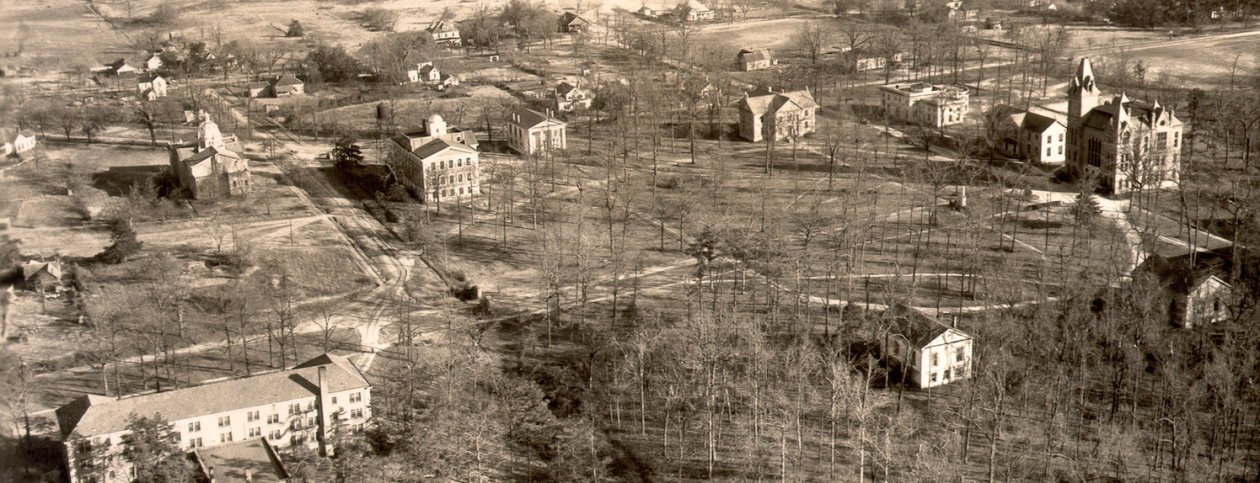
In 1919, the trustees of Emory College were preparing to move their small but thriving school from its cradle in Oxford, Georgia, to the booming, bustling city of Atlanta, where the college would become the school of liberal arts in Emory University, newly chartered in 1915 and beginning life in the suburb of Druid Hills. The leaders in this enterprise were the brothers Asa Candler, chair of the board, and Warren Candler, the chancellor. Older brother Asa was the Coca-Cola magnate who had put up a million dollars and seventy-five acres to jump-start the new university. Warren was an Emory alumnus and former president of the college, now a leading bishop in the Methodist Episcopal Church, South. Both men were resolute in their high ambitions for their university.
That year, 1919, would bring the move of not only Emory College but also the collection of odds and ends that the college called a museum. Perhaps seeking to preserve the eclectic collection from an uncertain fate while the university was still taking shape, Chancellor Candler had asked the trustees formally to establish the Emory University Museum. Its aim, he said, would be to display what he called the “ethnic, biological, geological, archaeological, and historical” artifacts of human culture. A hundred years later, here we are.
I think of the museum’s biography as having seven chapters, like the days of creation, although day seven in this case is hardly a day of rest. These seven chapters include one about ancestry, as many life stories do. A biography of Winston Churchill must say something about his socially prominent parents, just as a biography of Lincoln must climb up out of the unpromising bleakness of his early years. So it is with the museum at Emory, whose origins echo the modest circumstances of Lincoln’s youth and some of the grandeur of Churchill’s maturity. So first some notes on the museum’s antecedents.
The first history of Emory University was published in 1936, on the centennial of Emory College. The author, Henry Morton Bullock, dates the earliest stirrings toward a museum to 1839. In that year, the College purchased from a Dr. I. J. Cohen “a mineral cabinet containing a collection of 500 gems.” By the opening volleys of the Civil War, in 1861, that collection had grown to number 20,500 rocks of various shapes, sizes, and types.
This rock collection may seem to be the Neanderthal ancestor of the sleek and cerebral homo sapiens that is the current museum. In fact, that’s true. But in at least one important way, this mineral collection resonated with the later mission of the Emory museum. For the purpose of the mineral collection was not simply for people to view a lot of pretty things; it was a tool for teaching. Today’s professors of art history, classics, religion, Middle Eastern studies, and other departments who send their students to the museum would understand the desire of their forebears to have their students see the actual artifacts in their three-dimensional reality, which is more instructive than a classroom description.
The Civil War, unfortunately, wrought havoc on the Oxford campus, as Emory College closed for the duration. When the college reopened in January 1866, the mineral collection and other valuables had vanished. It took President Atticus Haygood to sow new seeds for a museum. In 1876, he commissioned John Fletcher Bonnell, professor of natural science, to communicate with “scientific gentlemen in all parts of the country with the view of exchanging mineral species and thus increasing our own.”

For historian Bullock, this mineral collection marks the beginning of the Emory museum, which would live in various places on the Oxford campus for the next forty years.

The museum at Oxford gained new direction when a Methodist missionary named William Pattillo Turner, Emory College class of 1889, sent from Japan a trunk full of “Japanese costumes, trinkets, and antiques.” These became the nucleus of an Asian collection that would come to include Thai pottery, a Korean wine pot, a brick from the Great Wall of China, Japanese samurai armor, and—perhaps foreshadowing in some karmic way the future commitment of Emory to Tibetan Buddhist studies—a Tibetan prayer wheel. Significantly, the museum that had begun as a kind of natural sciences center now had a mission to exhibit the varieties of human experience.
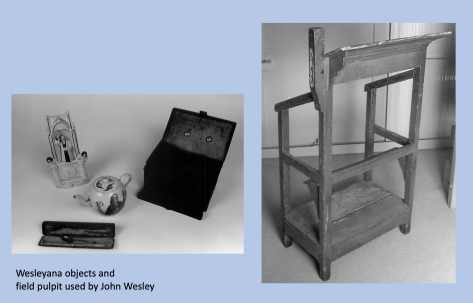
A related area came into focus in 1911, when Bishop Warren Candler purchased a collection of Wesleyana from an Englishman named Robert Thursfield-Smith. The trove included some of the first Methodist hymnals, correspondence of the Wesley family, and odd personal items of early Methodist leaders, like Bishop Francis Asbury’s razor.
In that same year, 1911, a flock of birds alighted at the museum, as the Reverend William H. LaPrade gave his alma mater a collection of stuffed Georgia birds, which were multiplied five years later when a Mrs. Robert Windsor Smith donated her late husband’s collection of four hundred specimens.
By the end of its first chapter of existence, then, the Emory museum had collected an assortment of objects that made the word “museum” a term of aspiration as much as a description. It was an omnium gatherum, a gathering of many things, all intended to help Emory students see firsthand the wonders of nature and the curiosities of human culture that they learned about in their classes. It would require the courage and imagination of a professor of the Hebrew Bible for the museum to take its first step toward eminence.
In chapter 2, the museum moves to Atlanta and becomes mummified.
Gary S. Hauk
Sources:
Michael C. Carlos Museum Records. Stuart A. Rose Manuscript, Archives, and Rare Book Library, Emory University.
Archival collection. Office of the Registrar and Collections Manager. Michael C. Carlos Museum.


 Emory Historian's Blog