As another academic year picks up steam, last week brought both good news and bad news from Emory University.
The good news is that the Hon. Leah Ward Sears began her term as interim president on September 1. An alumna of Emory Law School, she adds to a number of distinguished firsts in her résumé the distinction of being the first African American to lead Emory and only the second woman to do so. Judicious, widely known and admired in Georgia, and deeply devoted to her alma mater, she brings fifteen years of experience as an Emory trustee to the job. I got to know her during the first ten years of her trusteeship, while I was still working in the President’s Office, and I have great respect for her. I wish her every success in helping to guide the institution through the minefields being laid for universities by the administration in Washington, DC. It will not be an easy job.
Unfortunately, the bad news is that one of the first campuswide communications from the President’s Office at Emory last week announced the termination of offices and programs intended to foster diversity, equity, and inclusion. This news is unsurprising in view of similar developments at other universities under pressure from the Trump administration. The White House seems intent not only on shifting the supposed cultural biases of universities but also—through the elimination of hundreds of millions of dollars of scientific research grants—on weakening the intellectual firepower of institutions that have been, until now, the envy of the rest of the world.
According to the statement from President Sears, “Closing offices or reimagining lawful programs is not, after all, the same as ending our unwavering commitment to fairness, belonging, and opportunity for all, values that are part of Emory’s DNA.” And there is part of the rub. Institutions, after all, do not have DNA. Human beings have DNA, which determines their eye color, handedness, hairline, blood type, and many other traits without a bit of effort, attention, or even thought from the individuals who carry the DNA.
An institution, on the other hand—a university—cannot be so effortless, inattentive, or thoughtless. Any values it holds dear must be deliberately embodied and made manifest through intentional policies, practices, and programs that will carry forward its vision and mission. As Alexis de Tocqueville famously observed, democracy in America has its foundation in “habits of the heart,” which are formed and nurtured by organizations, civic associations, and rituals that knit together the moral fabric of a community. Without these organizations and their attendant offices, “values” remain simply wordy ideals. The same is true for universities.
Emory history has lessons for how institutional values and the moral fabric of a university community must be made concrete through real programs run by competent and dedicated people. The lawsuit that Emory brought against the State of Georgia in 1962 for the right to integrate was a declaration of the institutional value of inclusion regardless of race. But the admission of Black students did not by itself make that value real. As the protests by Black students in 1969 made clear, a university can allow people in without making them feel that they belong. Belonging and opportunity depended on changes in institutional habits and the creation of programs like the African American Studies Department.
Women had a place at Emory beginning in 1917, but as late as the 1980s and 1990s, women did not always feel safe on campus, they had a harder time advancing professionally, they were underrepresented in leadership roles, and sexism remained a powerful “value” for many on campus, especially in the fraternities. The creation of the Center for Women and the Women’s Studies Program (now the Department of Women’s, Gender, and Sexuality Studies) helped not only to change policies and habits but also to manifest a set of values—among them respect, fairness, and security—in which the university could take pride.
Similar paragraphs could be written regarding the emergence of institutional consciousness about the belonging and rights of gay, lesbian, bisexual, and trans people; about students who are not U.S. citizens; about members of our community with physical or emotional challenges; and about persons with different religious beliefs than those of Emory’s founders, or with no religious belief.
In 2005, Emory launched a ten-year strategic plan called “Where Courageous Inquiry Leads.” That plan drew on the language of the vision statement that had been crafted two years earlier, a statement that held forth the promise of a university that was internationally recognized for being “inquiry-driven” and “ethically engaged.” The values articulated in that vision had to be mapped onto measurable goals achieved through new programs or significantly beefed up old ones.
The point is that as Emory has clarified its values, its ideals, over decades of institutional evolution, the university has had to innovate, invent, and discover ways to allow those values to shape people’s lives in real, practical ways. Some of those innovations have been programs in diversity, equity, and inclusion. They have formed and nurtured the “habits of the heart” of Emory people—the values by which we interact with each other.
The question, then, is this: If the federal government is going to make those programs go away, how is Emory going to create new ways to incarnate and institutionalize its values of fairness, belonging, and opportunity for all going forward? How will Emory continue making its values concrete? On this question, last week’s statement makes only vague reassurances. I hope that the coming year will bring clear and persuasive answers.
Prompted by the protests and arrests on the Emory Quadrangle in April 2024, the Interdisciplinary Workshop in Colonial and Postcolonial Studies this autumn presented a series of monthly seminars on “The University and Democracy.” The series intended to explore three questions: What is a university? Who makes up the university? What do recent developments at Emory tell us about the challenge to democracy—in academia and beyond?
The first seminar focused on “the idea of the university,” especially since the rise of the research university in the nineteenth century and its flourishing in the United States. The second seminar focused on protests at U.S. campuses, especially those in the spring of 2024 at dozens of colleges and universities.
For the third seminar, on November 14, 2024, I was invited to join a panel to share the history of specific protests at Emory over the past sixty years. I spoke about a race-related protest in 1969, while Professor Emerita Bobbi Patterson related her engagement with protests for LGBTQ rights in the early 1990s, Professor Jonathan Prude talked about protests regarding labor practices in 2010-2011, and Professor Pamela Sculley addressed some of the implications of last spring’s protests regarding the war in Gaza.
The text of my presentation follows.
I begin with the proposition that all of the protests at Emory University since the 1960s have implicitly or explicitly raised the three questions that have shaped this seminar series: First, who belongs in this community? Second, are some members of this community second- or third-class members who lack the full privileges of the community? Third, what is the appropriate forum or process for making decisions that affect all members of the community and even the nature of the community itself?
My understanding of the history of Emory since World War II tells me that all of these questions have been at play in the protests about race in the 1960s, about women’s safety and opportunities in the early 1990s, about gay, lesbian, and queer rights somewhat later in the 1990s, and about class and labor in the 2010s. My specific charge for this panel, however, is to focus on the protest of May 1969 led by the nascent Black Student Alliance. First let me give a little background.
Melissa F. Kean, a historian now retired from Rice University, has written the definitive history of the desegregation of private higher education in the South, focusing on Duke, Emory, Rice, Tulane, and Vanderbilt [Melissa F. Kean, Desegregating Private Higher Education in the South (LSU Press, 2008)]. The story at Emory is one of complex negotiations throughout the 1950s, as Emory was hemmed in by Georgia Jim Crow laws and a conservative board, on one hand, while on the other hand Emory faculty and students, the Methodist Church, and even the administration’s own ambitions for national eminence pushed against the status quo.
The story is too involved to share here, but my reading of it is that while desegregation was a long time in coming, and while external pressures of federal law and federal funding influenced the outcome, the eventual decision to sue the state of Georgia for the right to integrate was the result of shared governance, in which faculty persistence, student voices, a few enlightened administrators, and a changing board joined in a not-always-smooth process of determining to move the university into a new era. They had confronted the first of our three questions, namely, who belongs in our community, and they had answered that African Americans belonged in a way that they had not. They were no longer to serve only as groundskeepers and laundry workers, janitors and food-service workers. They were to be students as well. That new era began in 1962, when the Georgia Supreme Court struck down the prohibitive law that Emory had sued to overturn.
Go forward seven years to 1969, however, and despite the admission of African American students, life on this predominantly white campus was not easy for them. They were few in number, and there were no Black faculty members in the College and no Black administrators. In March of that year, the newly formed Black Student Alliance sent President Sanford Atwood a list of proposals for enhancing the Black student experience. They requested more deliberate recruitment of Black students; funds for an orientation program for newly admitted Black students; a house or other facility dedicated for use by Black students; a Black adviser; an African American studies program; more Black faculty; and more library resources devoted to Black culture, history, and experience.
The president’s response was somewhat tepid, even defensive. And while the president invited the Black students to engage collaboratively in effecting change, his response was marked by signposts to the complex bureaucratic minefields that students would have to navigate to get any real satisfaction.
Unsatisfied, on May 25th Black students interrupted the Sunday morning worship service in the university chapel, which at that time was in what is now called Convocation Hall. With placards and voices, they called out what they viewed as the institutional racism that still persisted at Emory. From the chapel the thirty-five or so students marched to Cox Hall, where they distributed flyers calling for a boycott of the cafeteria, which at that time served the hospital as well as the university. The protesters cited racist employee regulations and substandard wages for the cafeteria workers, who were earning only a penny more than the federal minimum wage of $1.30—hardly a living wage even in 1969.
Throughout that Sunday, the original protesters were joined by others, including white students and some white faculty and staff members. Photos of the incident show a stand-off between the protesters and what appear to be one or two administrators. According to reports in the Emory Wheel, the protesters maintained a picket line but did not prevent people from entering the cafeteria.
On Monday the 26th, the BSA held an evening rally on the Quad, in front of Candler Library, that attracted about five hundred persons. Black student leaders who spoke would later constitute a who’s who of Black Emory alumni: Hank Ambrose, now a retired DC lawyer and former Emory Alumni Board member; Larry Palmer, who entered the U.S. Foreign Service and distinguished himself as an ambassador to several countries; and James Gavin, who became a national expert on diabetes and chaired Michelle Obama’s task force against childhood obesity as well as serving as an Emory trustee. After listening to the series of speakers, the crowd dispersed without any resolution or sense of next steps.
The next day, Tuesday, two Emory presidents addressed the tensions in diametrically different ways. Charles Haynes, who was only a sophomore but had been elected president of the Student Government Association, called a special meeting of the SGA to discuss the BSA demands. He and his fellow SGA executives made clear that they wanted to de-escalate the tensions but also find ways to fund and support the BSA proposals, which they considered reasonable.
On the other hand, President Atwood sought and received a restraining order from DeKalb County Superior Court prohibiting protesters from blocking Cox Hall or the entrance to the campus; from disrupting the peaceful operation of the university; and from occupying university buildings. President Atwood was prepared to have students arrested if it came to that.
What happened next sounds legendary but is the truth and should be part of the historical knowledge of every Emory person. You can read about it online in the autumn 2005 issue of Emory Magazine, where Charles Haynes tells the story. In short, young Charles—just a sophomore, remember—went alone late at night to Lullwater, the university president’s home, and knocked on the door. He was greeted by President Atwood, who stood, as Charles tells it, in his bathrobe. Atwood invited Charles inside, and the two had a long conversation about what was happening. When Atwood admitted that racism did exist at Emory, Haynes sensed that a way forward had opened up.
The two presidents drafted a statement that Atwood read at a convocation which had been called by the BSA for the next day, Wednesday, the 28th. In Glenn Memorial, Atwood recognized publicly the existence of institutional racism at Emory and pledged the administration’s efforts to dismantle it and implement the BSA proposals.
Out of this protest and the university’s response came the creation of the first Black studies program at a private Southern university; the hiring of the first tenure-track African American faculty member in Emory College, Delores Aldridge; the establishment of the BSA House; the hiring of the first Black administrator, Marvin Arrington; ramped-up recruitment of Black students; and President Atwood’s creation of the President’s Commission on the Status of Minorities.
It’s important to note that while some faculty applauded the BSA proposals, some of the more senior and distinguished faculty members in Emory College decried the protests and the administration’s accommodation to the students’ demands. All of these things were, in the view of some faculty, a threat to academic integrity, which should be determined and safeguarded by the faculty. (One senior member of the Chemistry Department, for instance, noted that the proposal for a Black studies program had not yet come before the Curriculum Committee of the College.)
It’s also important to note that some Emory staff members put their careers at risk in objecting to Atwood’s heavy-handedness. One of them was Jerome Zeller—Jerry Zeller—who was an Emory alumnus, Episcopal priest, professor, and dean of students. The day after the administration obtained a restraining order, Zeller wrote a memo to Atwood, and I quote part of it here:
It is my opinion . . . that to serve the restraining order on students . . . will mark the end of reason and destroy a valuable dialogue which is now beginning to take place.
You have offered the life of this academic community to off-campus authorities, and have offended those who have worked to keep Emory a real community. Through your action the University is no longer a responsible agency for reconciliation.
You now proceed fully against my personal principles and my professional advice.
So here we see the beginning of an answer to the third question in front of us. Who gets to decide about matters that affect the whole community? It cannot be only the administration, only the faculty, only the students, and certainly not authorities from beyond the campus. It must be the community as a whole, in some kind of open forum, through argument and debate.
I want to conclude by addressing another question that has animated this seminar series: what is a university? Our friend and colleague Silas Allard, who attended the first two seminars in this series but is dutifully teaching a class today, has suggested that the history of the university as a locus of protest since the mid-twentieth century perhaps points to the reality that protest is not a disruption of the university’s mission but is, rather, central to what a university is all about. Universities are in many ways conservative institutions. But if we think of the way scholars are always wanting to revise each other’s work, always raising questions about the validity of arguments, and regularly upending the status quo, then yes, protest seems to reside in the very DNA of the university and must be welcomed. Challenging received wisdom is part of what defines the university as an institution and, more, as a community.
Addendum:
That concept of the university as a community was important to the identity of Emory for most of my thirty-five year career at Emory, beginning during the presidency of Jim Laney. In fact, the concept was clearly articulated in the annual report of the president for 1991, which I drafted as secretary of the university.
In early 1990 a series of sexual assaults (two in fraternities and one at a secluded part of Lullwater Preserve) prompted campus activism in behalf of greater campus security and more prominent resources for support of women. President Laney appointed a twenty-five-member committee called the Task Force on Security and Responsibility, which had an eight-point charge, including “sensitivity to gender and ethnic diversity.” Working quickly, in two months the task force issued a report with twenty-four recommendations, including the creation of a women’s center. All of those recommendations would be implemented in time.
Reflecting later on the tumult of that year, the Annual Report of the President, published in Campus Report on January 28, 1991, summarized the transformation that the protests of the previous spring had set in motion:
All of this discussion showed, among other things, that a University must find appropriate ways to air and deal with conflict. We learned not that the fabric of our common life was in danger of being rent by discord or suspicion, but that the warp and woof of our tapestry was strong. . . . Emory can hold safely in its midst the conflicts typical of close-knit communities. What is more, Emory can transcend these conflicts in creative ways. In a society as pluralistic as the America of the late-twentieth century, we can expect more such tests. American universities must explore new avenues for defining and resolving conflict, and Emory means to lead in this endeavor.
Unfortunately, the three decades since those sentiments were published have wrought a further transformation of Emory that makes the exploration of those “new avenues” more difficult. The institution is larger, more complex, more top-heavy with administration, more subject to the social and financial pressures of parents, students, donors, and government oversight. The sense of community (whose weakening was already felt in 1991 by some faculty members who had been around for several decades) has eroded further as the demands on faculty time have multiplied, and as the focus on corporate leadership skills supersedes fostering the old ideal of a “community of scholars.” (However at odds with each other those old scholars might sometimes have been, their priorities of teaching and scholarship included discourse.) Nevertheless, our polarized society more than ever needs methods for holding community together while debating the fundamentals by which we live. Universities, more than most institutions, may be uniquely situated to serve as laboratories for creating those methods.
by Cynthia Patterson, Professor of History Emerita, Emory University
Note: A somewhat longer version of this text was presented as a lecture to the Emory University Emeritus College on March 18, 2024. Gary Hauk
The significant and direct involvement of Emory University’s Michael C. Carlos Museum with the antiquities market over the past twenty-five years has resulted in collections that startle visitors with their quality and have pushed the Carlos into the upper echelons of U.S. museums, so that some would speak of “The Carlos” in the same breath as “The Getty” or “The Met,” at least with regard to Greek antiquities. Yet how this happened is something about which all Emory faculty members and students should be concerned. The cost—not only in dollars but also in ethical principles and reputation—may have been higher than they realize.
Nothing is more important in an academic community than a commitment to open and critical inquiry, both in our individual disciplines and in the running and management of the university and its institutions, including the university museum. In that vein, it is time for Emory to make the Carlos collections a focus for educating our community and the larger public not only about art and artifacts but also about what could be called “anti-archaeology”: the networks of illicit excavation and trafficking that strip ancient objects of their historical value and their ability to teach us about the societies that produced them, not to mention robbing nations of their cultural heritage. A forthright accounting of what happened at the Carlos would be an act of responsibility of which the Emory community could be rightly proud, and which would serve as a foundation for future acquisitions, gifts, provenance research—and the Carlos Museum’s contribution to the educational mission of Emory.
My own education about these issues began in 2015, when I started to teach directly with the objects in what I call the ancient Mediterranean collections at the Carlos and to investigate their labels and provenance. The more I learned, the more I discovered that the Carlos (and even some of my colleagues) was not interested in my questions and concerns. The more I learned, the better I understood the concern expressed many years ago by Prof. Robin Rhodes, of Notre Dame, an archaeologist and a long-time friend, when he learned that the Carlos Museum had hired Jasper Gaunt to curate the Greek and Roman collections. Gaunt’s decade-long association as employee and partner of Robert Hecht, perhaps the central figure in the illicit antiquities market at that time, was well known to those working to expose and combat the looting of ancient sites and the trafficking of looted objects.[1]
When Gaunt was fired in May 2018, I thought that there would be a change of course and the inauguration of a genuine discussion of “market issues” at the Carlos, but that did not happen. I wrote to university administrators but received only polished assurances that all was well, and that of course Emory was interested in the highest ethical standards for the museum’s management and collections. When the former director retired in 2021, I again had hopes that new leadership would turn things around. In March of 2023, the museum and the university repatriated to Iraq a small ivory artifact purchased in 2006 that had been looted from the Baghdad Museum, most likely in 2003. Rather than discuss the context and issues openly, the museum spun the story in a different way, and my patience ran out. And so, when Stephanie Lee of the Chronicle of Higher Education contacted me in May 2023 to ask if I would be willing to talk about my experiences with the Carlos, I said yes. I kept on talking, and here I am, still talking.
Best Practices in Museum Collecting in the era of UNESCO 1970
I begin by stepping back and looking briefly at the larger picture of the world of museum collecting in 1985, when the newly configured and reconceived Emory Museum of Art and Archaeology opened its doors in the renovated Law Building, now Michael C. Carlos Hall. I was there. It was the spring of my first year at Emory. The opening of the new museum took place politically and culturally in the immediate wake of the approval by the U.S. Congress two years earlier of the 1970 UNESCO convention (or treaty) on Means of Prohibiting and Preventing the Illicit Import, Export, and Transfer of Ownership of Cultural Property. The principles of the convention had been adopted earlier by the Archaeological Institute of America, which in 1973 issued its own “Resolution on the Acquisition of Antiquities by Museums.”
In the wake of World War II, there emerged a call for a united global effort to protect the cultural heritage of all nations and to work for the recovery of sites and objects plundered in the colonial era. There was also increasing concern about the rampant illicit digging and looting of archaeological sites, especially sanctuaries and tombs or cemeteries, and the growing awareness of the market, particularly in Europe and North America, for “art.” Private collectors and museums stimulated and emboldened a trafficking chain connecting the tombaroli (Italian for tomb robbers) to restorers and middlemen, and eventually to dealers and glitzy galleries on Madison Avenue. The United Nations seemed to be the organization that could and should take the lead, under the aegis of UNESCO, the United Nations Educational, Scientific, and Cultural Organization.
After much discussion and two preliminary recommendations, in 1956 and 1964, UNESCO announced in 1970 a new convention calling upon member nations, including many in the developing world now newly independent of imperial control, to work together to combat looting and trafficking of antiquities.
The convention, approved in November 1970, was expressly aimed at, among other things, the illicit excavation (digging up) of ancient sites, sanctuaries, and tombs, as well as the looting of museums and national monuments. Importantly, the convention asserted that from 1970 on, collectors and museums should not acquire any object which could not be documented to be out of its country of origin before 1970, or did not have proof of legal export after 1970. The goal of the convention was to “prohibit and prevent” illicit export of cultural property, with the understanding that the expanding global market was driving the escalating rate of looting. The strength of the convention rests on its insistence that the burden of proof of legal export should be on the seller; unless an object can be shown to have been exported legally, it cannot be legally acquired. It is indeed a statement of guilty until proven innocent—an indication of how widespread was the evidence for trafficking at that time.
How then did museums—and university museums in particular—respond to UNESCO’s newly formulated standards?[2] An important positive example is the University of Pennsylvania Museum of Archaeology and Anthropology (now called the Penn Museum), which not only signed on to the new standards but had even anticipated them with its own declaration on April 1, 1970. That Declaration reads, in part:
The curatorial faculty of the University Museum today reached the unanimous conclusion that they would purchase no more art objects or antiquities for the Museum unless the objects are accompanied by a pedigree—that is, information about the different owners of the objects, place of origin, legality of export, and other data useful in each individual case. The information will be made public.
In light of this declaration, the Penn Museum was called upon to advise on the final formulation of UNESCO’s 1970 convention. The University of Pennsylvania museum thus took its position early, and it continues to be a leader on these issues today.
Full disclosure: the University of Pennsylvania is my graduate alma mater. I arrived there in the fall of 1971 to join the interdepartmental graduate group in ancient history and took a number of classes at the Penn Museum and also participated in the excavation of an underwater sanctuary in the Greek Argolid. I did not become an archaeologist, because texts instead won my heart; but the experience did instill in me a deep respect for careful and principled archaeology.
The Penn Museum was established in 1877 in conjunction with the university’s excavation of the site of ancient Nippur in current day Iraq; objects from that excavation formed the beginning of the museum’s collections. Participation by Penn faculty in excavations at Ur and other sites in the late nineteenth and early twentieth centuries brought further additions, with the result that the museum’s collection largely comprised scientifically excavated material—documented, measured, photographed, and recorded when excavated.
In 1966, however, George Allen—a Philadelphia antiquities dealer whose gallery, Hesperia Fine Arts, was a partnership with Robert Hecht—offered the museum the opportunity to purchase an unusual and quite spectacular collection of gold jewelry that Allen (and Hecht) said was from Troy. Given the mystique of Troy and the fact that the legendary nineteenth-century excavator Heinrich Schliemann had discovered similar jewelry, what was a museum to do? The objects had no ownership history, and the Penn Museum staff thought they were most likely looted, perhaps from a variety of sites. But the allure of potentially Trojan gold was strong. And the Penn Declaration was still to come.
Brian Rose, the James B. Pritchard Professor of Archaeology and curator of the Mediterranean section of the Penn Museum, tells the story of the fate of the “Trojan gold.”[3] In brief, after some discussion and consultation with the Turkish cultural attaché, the Penn Museum went ahead and bought the collection from Hesperia Art for ten thousand dollars. But the decision did not rest easy with the Penn faculty and museum staff; early in 1970 they issued their “Pennsylvania Declaration.” Again, the museum pledged “to purchase no antiquities in the future unless their place of origin and legality of export are certain.” They have kept to their word. But that is not the end of the story of the Trojan gold.
The discovery in 1993 that Schliemann’s own collection of gold jewelry—smuggled out of Turkey and deposited in a Berlin Museum but gone missing in the last days of World War II—had now been found in the Pushkin Museum in Moscow, led to renewed attention to Penn’s so-called Trojan gold. In 2009, Prof. Rose invited experts to test and analyze the gold to determine its genuineness and, if possible, its origins. A few grains of soil were found within a loop of gold on the back of a gold pendant, and tests revealed the soil to be consistent with a northern Anatolian (Trojan) origin. At this point Turkey became interested, and a settlement was reached in less than a year, by which Penn returned the gold to Turkey on indefinite loan and, in return, received privileges for further archaeological excavation and museum loans. That Penn’s Trojan gold had been out of Turkey before 1970 did not figure into the discussion.
A number of other university museums followed Penn’s lead, but there was resistance among both the sellers and collectors of antiquities, particularly among museums with a focus on fine art rather than archaeological artifacts. Although Congress in 1983 adopted the relevant sections of the UNESCO standards as U.S. law, the antiquities market seems not to have paid much attention. Or only so much as to recognize a challenge: if a history of ownership was required, then why not invent one?
This brings us to the purchase of the spectacular “million-dollar vase,” an Athenian early red-figure krater signed by the artist Euphronios and acquired by the Metropolitan Museum of Art in 1972. The Met purchased the vase (shown below) from Robert Hecht.
This was the most by far that anyone had ever paid for a Greek vase, and there was immediately suspicion about its origins. The price was also not unnoticed throughout the network’s chain, but re-echoed down to the tombaroli who, unsurprisingly, took even more eagerly to their midnight excavating. The closeness in time of this purchase to the 1970 UNESCO convention should not be taken as a sign of the convention’s emptiness, but rather as an indication of the determined efforts of traffickers to supply the market despite the convention.
The New York Times initially featured the new Met acquisition in its Sunday magazine on November 17, 1972, then assigned a follow-up to Nicolas Gage, an energetic young Greek American reporter. Gage dug up evidence in the New York customs records about Hecht’s importation of the vase into the U.S. from Switzerland, then tracked the vase back to the Swiss dealers, who suggested that it had come from a tomb recently dug up in Italy. The reporter discredited Hecht’s story that the vase came from an old collection in Lebanon, and Gage also located a tombarolo who claimed to have dug up the vase, but in the end the charges against Hecht and the tombarolo did not stick. Still, the Italian government told Hecht that he was no longer welcome in Italy, so he moved to Paris.
The million-dollar vase remained on view at the Met for another thirty-four years until finally, in 2006, the museum announced that it would return the vase to Italy. The Met said it had been presented with “irrefutable evidence” of illicit digging, which included details in Robert Hecht’s memoir (seized by the French police, in cooperation with Italian investigators, from his Paris apartment in 2001).
The memoir, by the way, was returned to Hecht and is available in semipublished form under the title Bob Hecht on Bob Hecht; the copyright is held by Emory’s ex-curator, Jasper Gaunt. The memoir presents an image of a man who loves buying and selling, acquiring and spending large sums of money, and feels no remorse about dealing in looted artifacts—or any responsibility for the damage done to objects or historical knowledge or cultural heritage. Rather, he boasts that he is providing beautiful objects to great museums (for a price of course).
Hecht’s notion that he was rescuing objects for the benefit of humanity feels like a bitter joke when we look at an example of a looted object in whose trafficking he played a key role. The photos below, of a kouros (statue of a young man), show what can happen to an ancient object that is illicitly dug up.
Only a piece of the kouros dug out of the ground ended up for sale by the Hecht galleries. On November 2, 2000, Hecht sold the kouros fragment to New York hedge-fund billionaire and antiquities collector Michael Steinhardt for $2,348,555. It is currently valued at $14 million. The full story is in New York Times articles and in the Manhattan DA’s official “statement of facts,” which includes details of the looting and sale, and Hecht’s assurance to Steinhardt that the kouros fragment was legally exported. This is not a story of rescue but rather of theft, mutilation, and fraud. Incidentally, Michael Steinhardt, recently returned to Greece antiquities, including the kouros fragment, worth a total of $70 million dollars.[4]
Bob Hecht on Bob Hecht has proved useful in providing important details of his association with other traffickers and dealers, his numerous partnerships, and names of his various galleries, clients, and customers, which include museums and prominent collectors who donate to museums. An “organigram” discovered by authorities in 1995 in the Rome apartment of a member of Hecht’s trafficking network provides details.
In his account of a New York 1977 grand jury hearing in relation to the Euphronios krater, a hearing he regarded with disdain, Hecht claims to have entertained the jurors by rattling off the various museums and universities to whom he had sold objects—among them, the British Museum, the Louvre, the Museum of Fine Arts/Boston, Harvard University, and the University of Pennsylvania.
Did he say Harvard? In 1971, Harvard had joined Penn in signing on to the UNESCO guidelines and issuing a statement pledging that Harvard would no longer accept objects of questionable pedigree. It seems, however, that enthusiasm at Harvard dimmed over the next couple of decades, as the appeal of fine art beckoned and opportunity for acquisition presented itself.
An article on the front page of the Boston Globe on January 16,1998, with the headline “Harvard Museum Acquisitions Shock Scholars,” presents a story that speaks directly and forcefully to these issues.[5] In 1996 Professor Irene Winter, then chair of Harvard’s Department of Art and Architecture, expressed concerns about the background of a number of objects on loan for an exhibit in the Arthur M. Sackler Museum, protesting to the director of Harvard Museums, James Cuno, that the objects on exhibit were “purchased in clear contravention of international convention, for which its purchasers have shown consistent disregard over the years.”
Winter’s formal protest led to campus debate, which spilled over from the Sackler exhibit to focus on a number of objects purchased from Robert Hecht and to a large collection of pottery fragments purchased from an unnamed dealer who had acquired them over the years via the market; both the Hecht purchases and the fragment purchases were defended by Cuno and also by David Mitten, the faculty curator of the classical collections. But Winter stood firm, asserting, “Ethically, given the enormous amount of looted material on the market, we are obligated to presume these to be guilty until they are demonstrated to be innocent, and therefore the burden of proof should be on the purveyor of the object.”
Harvard’s collections are still the focus of some scrutiny, but some aspects of the Harvard experience are particularly relevant to the situation at Emory: (1) the complicity of the director and curator in overriding Harvard’s explicit principles of ethical; (2) the open discussion and awareness in 1998 of Robert Hecht’s key role in trafficking networks and in the Met’s purchase of the Euphronios vase;[6] and (3) the important role of the press.
In cases where there is resistance to making public all evidence concerning the history of ownership, a critical investigative press can provide important assistance, both by digging for information and for holding feet to the fire. The Atlanta Journal-Constitution, however, did not take on this role as the Carlos collections grew, but rather played the part of enthusiastic cheerleader. The Emory Wheel, on the other hand, Emory’s independent student newspaper, has stood up and taken a determined interest in opening up the story of the spectacular growth of the Carlos. This is a credit to the spirit of inquiry among undergraduates at Emory University.
The History of the Emory Museum and its collections
The early history of the Emory museum (from 1876—a year before Penn!] and its collections is a well-known part of Emory lore (especially through Gary Hauk’s series of history blog posts). I begin in medias res, when the new plan for a Museum of Art and Archaeology at Emory took shape in the early 1980s under the prodding of Monique Seefried, an Atlanta transplant with a degree in archaeology from the Sorbonne.
The collections of the Emory Museum of Art and Archaeology (chartered in 1982 with Prof. Clark Poling as its first director) combined the Art History Department’s Works on Paper collection with an archaeological collection largely drawn from Egypt and the Near East. The latter included mainly (1) objects gathered by Emory’s William Shelton during his travels in the Middle East in 1920 with James Breasted of the University of Chicago, from the shops in Egypt, and often directly from the ground in Mesopotamia; (2) objects from the early excavations at Jericho in the mid-1950s, directed by Kathleen Kenyon ,in which the Candler School’s Prof. Boone Bowen participated; and (3) objects from the maritime excavations of Edwin Link in the harbor of Caesarea Maritima, in which Prof. Immanuel Ben Dor of the theology school was a participant. In addition, there was a significant collection of oil lamps, providing a sequence from the early Bronze Age to the thirteenth century CE.
But the organizers and the objects needed a space. Here President James Laney stepped in to help, and in the summer of 1981 convinced Michael Carlos, the owner of a prosperous Atlanta wine and spirits distribution company and the son of Greek immigrant parents, to pledge $1.5 million dollars toward the renovation of the old Law Building to house the new museum in what then became Michael C. Carlos Hall.
The renovation took several years, but Monique Seefried energetically set about organizing a preview exhibit of the museum’s collections. The exhibit opened in the spring of 1982 in the Woodruff Library’s Schatten Gallery.
At the opening of the exhibit, Seefried commented to Thalia Carlos (Michael’s wife) that she was sorry there were not more Greek artifacts (three Greek objects are listed in the catalog). Mrs. Carlos responded quickly to this revelation and began to urge her husband to contribute more funds specifically for the acquisition of Greek art, and in 1984 the Emory museum made significant purchases at a number of New York and European galleries. Thus, when the museum officially opened in its newly renovated space in the spring of 1985, it contained some high-quality Greek art.
The 1984 purchases included a small bronze Roman-era head identified as Alexander (shown below), which I have regularly drawn on in my Greek history classes for our discussion of portraits of Alexander the Great.
A few years ago I noticed that the head had no genuine history of ownership other than “Purchased by Emory University Museum of Art and Archaeology from Brian T. Aitken (1952–2009) [Acanthus Gallery], New York, New York.” I thought “Oh no!” Aitken is the gallery owner from whom the museum acquired the black-figure band cup repatriated to Italy in August 2023, and from whom, in 2003, the Carlos purchased the spectacular artist-signed calyx krater (showing Europa) with no record of prior ownership and indeed unknown to the world at large before it arrived at Emory. I have been agitating for more information about this acquisition for the past nine years to no avail.
Another 1984 purchase was a group of fragments of pottery and an amphora bought from Jonathan Rosen (Atlantis Antiquities), in New York. Atlantis Antiquities was co-owned by Rosen with Robert Hecht.
Two years later, in 1986, the young Emory Museum of Art and Archaeology again acquired a group of Greek artifacts from the antiquities market—noted by the Atlanta Daily World in a short article titled “Michael Carlos’ Wife Donates Art Honoring Husband Sunday.” The article tells the reader that “Thalia Carlos selected 21 pieces of ancient Greek art, valued at $400,000,” and “the new additions bring the number of objects in the collection to over 30.”
Some of the objects listed, including the Cycladic figure illustrated in the article, surely deserved scholarly investigation before purchase. Given the known rampant looting of Cycladic artifacts from the 1960s (they were much desired by European and North American collectors), and the name involved (the dealer Koutoulakis would now raise a red flag and should have at least given pause in 1986), we can ask whether the backgrounds of this and later purchases were investigated with the due diligence required by the 1970 UNESCO convention, U.S. Law , and the guidelines of the Archaeological Institute of America.
Although not mentioned in the Atlanta Daily World article, the 1986 purchases also included another batch of pottery fragments, acquired from the Zurich Galerie owned by Frida Tcachos, another prominent name in the trafficking network.[7] The trafficking of fine pottery fragments is an unsettling development in illicit antiquities trade. Most disturbing is the fact that examination of the breaks suggests that some might in fact be recent and intentional—to multiply the supply of artifacts and disguise their distribution—adding another level of criminality to their trafficking.[8] Currently Emory students study Greek pottery in the extensive Carlos collection of fine pottery fragments. Emory should open up the discussion of their provenance and ownership history to critical inquiry and make sure our students are fully aware of the issues and recent published discussions of the evidence.
Looking back, the purchases of 1984 and 1986 are a significant turn of direction for the Emory Museum, especially given its archaeologically focused origins. In 1987, however, the museum hired its first full-time director—Maxwell Anderson, a young, energetic, and ambitious former Metropolitan Museum assistant curator, who was nevertheless committed to the principles of ethical collection.[9] Acquisitions were made under his leadership (including two that have now been repatriated),[10] but his focus was on developing projects of cooperative international loans rather than market acquisition. The loans made under EUMILOP (Emory University Museum International Loan Program) have been heralded by many in the field as a model for ethical museum practice and cooperation (with avoidance of the market). These were the real glory years of Emory’s museum, when international loan exhibits were paired with symposia and resulted in catalogs to which faculty contributed, and performances of ancient drama staged by our own theater faculty and students.
Another shift came after Anderson left in 1995. A new curator, Anthony HIrschel (hired in 1997) oversaw faculty curators’ gradual return to full-time service in their academic departments and their replacement by staff curators—first Peter Lacovara in 1998 for the Egyptian and Near Eastern collections, then Jasper Gaunt in 2001 for Greek and Roman. Both were interested in acquisition. In 1999, Lacovara engineered the purchase of a nineteenth-century collection of Egyptian mummies and other materials held by a museum of curiosities in Niagara, Ontario. Many at Emory remember the excitement of citywide fundraising to make the acquisition possible.
The hoopla over the arrival of this collection seems to have spurred a new gift from the Carlos family. Gaunt, at any rate, told me that Mrs. Carlos in particular was energized to add substantial funds for purchases that would bring attention back to the collection of Greek art (and Roman art, which she was persuaded to consider a close relative).
Then came the blockbuster announcement: on November 15, 1999, at a lunch gathering he had called together, Michael Carlos announced a surprise gift of $10 million dollars for museum acquisitions.[11] It was “for Greek art,” Mrs. Carlos was reported to say, “because that is our heritage.” After the announcement, the president of the Carlos Museum’s board was also reported to have said that the timing of the gift was excellent, because of “what’s available in the market.” “This will make the classical collection world-class,” he continued. “It’s a defining moment for the museum.” It is startling to read this today and think about the enthusiastic shopping spree in the antiquities market about to occur. What was “available in the market” in 1999 included the kouros fragment purchased from Hecht by Michael Steinhardt the following year.
Acquisitions began quickly and took off exponentially when Jasper Gaunt was hired as curator for the Greek and Roman collections in late 2001. A member of the search committee told me that Gaunt’s appointment was urged because “he knew the market.” Indeed he did, having worked with and for Robert Hecht during the preceding decade.
Tony Hirschel left Emory for the Indianapolis Museum of Art soon after hiring Gaunt, and Bonnie Speed was hired as director in 2002. Gaunt went to work quickly on acquiring for the museum “not the best but the very best,”[12] and within a year, only $2 million of the $10 million dollar gift remained. There were gifts as well, including a large collection of fine pottery fragments collected by Dietrich von Bothmer, the Met curator who, with Thomas Hoving, had purchased the Euphronios krater from Robert Hecht. Many of the fragments donated by von Bothmer from his private collection had also been purchased from Hecht, and remain (so far) in the Carlos collections.
At the very time the museum was expanding its collection of fine pottery fragments in this way, it also made the decision to de-accession the collection of pottery sherds from an important long-term archaeological survey of the Moab plateau in Israel. These had been donated in 1991 by Prof. Max Miller, the director of the survey and a “founding father” and long-time supporter of the Emory museum. There is no better example of how the desire and ambition to make the Carlos a “fine art” museum and a “top five” university museum of classical art had pushed aside the objects and principles of archaeology and a teaching museum—and of ethical collecting. Prof. Miller retrieved his collection, and it is now a part of the Harvard Museum of the Ancient Near East (formerly the Harvard Semitic Museum).[13]
But to return to the Greek and Roman collections: until her death at eighty-three in 2011 (Michael Carlos had died in 2002), Mrs. Carlos continued to actively support Gaunt’s purchases, as is clear in the Atlanta Journal-Constitution story “Herculean Try of a Goddess,” in which she is reported to have given him the go-ahead to bid beyond his limit at a Sotheby’s auction in December 2006—and win the prize, an over-life-size head of a goddess (shown below), with a bid of $420,000.
“The marble head,” said Gaunt, “had been sold as Roman ten years earlier, but they’re just wrong. It’s obviously Greek.” Currently, however, the label says: “Culture: Roman. Era: Hellenistic.” Perhaps this is a sort of compromise, but not necessarily all that clear an identification for a museum visitor.[14]
Coming to terms with the full list of acquisitions made during the years of Jasper Gaunt’s curatorship, and the problems with the provenance stories that were told about them, is daunting. Also problematic are the labels (often quite fanciful) invented to provide objects with a grounded identity when they had none. Many of these labels were misinformed and misleading. Some have been revised. But problems remain. The way in which objects with uncertain histories have been provided with fabricated historical context or cultural description is antithetical to the principles of a university museum.
The Returns
I close with some comments on the recent returns the Carlos made to Iraq, Italy, and Greece. Some observers point to these and applaud the museum for negotiating repatriations and returns when they are called for. What is needed, however, is (a) a genuinely proactive approach, rather than waiting for someone to prove that an object had been acquired illicitly and (b) genuine transparency. For example, there is now a placard on view as one enters the Greek and Roman galleries informing the viewer:
Many objects in the Carlos Museum’s collection of Greek and Roman art were acquired from the European and North American art markets in the 1980s, 1990s and 2000s. Few of these objects have documented archaeological provenance or collection histories that can be traced beyond their presence at auction or with antiquities dealers, [meaning that] we cannot always be sure that the objects were excavated and exported legally from their country of origin.
As Elizabeth Marlowe, professor of art history at Colgate University, commented to the EmoryWheel, this statement fails to take responsibility. “There doesn’t seem to be any desire to undertake any kind of deeper reckoning, acknowledgment, self-reflection [or]examination.” said Marlowe. “That’s really a lost opportunity.”
James Wright, professor emeritus and the William R. Kenan Jr. Chair in the Department of Classical and Near Eastern Archaeology at Bryn Mawr College and former director of the American School of Classical Studies at Athens, was even tougher in his letter to the Chronicle of Higher Education:
Instead of admitting that a very few from its very large body of unprovenanced artifacts have been returned to the Italian government, the Carlos Museum should take advantage of its scandalous history of acquisition to make it a teaching moment for its public visitors and the students who come to study its collections. Anyone reading the labels in the Carlos Museum today, upon closer examination, may wonder why one object purchased in the last quarter century is labeled as having been “looted and illegally exported” or marked for repatriation to its country of origin while other objects in the same case merely have labels noting purchase date and speculation about provenance.
We are not given full disclosure but rather carefully crafted statements that elide or avoid responsibility. For example, for the Ivory inlay (shown below) looted from the Baghdad Museum (probably in 2003), purchased by the Carlos in 2006 from a Washington, DC dealer, and finally repatriated to Iraq in March 2023, we find the following acquisition details: “When the object was purchased in 2006, the provenance information supplied to the museum indicated that it came from a private collection that was formed in the 1960s.”
It would have been a simple task to investigate a possible connection with the Baghdad museum, especially given the wide publicity surrounding its looting in 2003 and the worldwide alert that went out to museums to be on the lookout for items looted from Iraq. But that was not done, even though the likely connection between the ivory inlay and the site of Nimrud (in Iraq) is acknowledged in the Carlos Museum’s own “Highlights of the Collections” (2011).
A further point about the consequences of looting is evident in a comparison of the two photos of the inlay posted on the Carlos web site (pre- and post-looting). Looters do not handle with care, and it is obvious that this extraordinary object has been seriously damaged.
There are similar issues on the returns to Italy and Greece, and the excuse that “we were not given accurate information,” what the Manhattan DA calls the “ostrich defense,” wears thin very quickly, especially when the objects were purchased from dealers with known reputations for trafficking. Consider the seated figure (below) from a grave monument, bought from Michael Ward in 2003.
The Carlos Museum states in its repatriation announcement that “no provenance information was given by the dealer.” Michael Ward’s connections to the trafficking network were well known in 2003. There were published accounts of settlements after a 1999 conviction; recently his name has surfaced in the Manhattan DA’s “Statement of Facts” regarding the 2021 seizure of illicit antiquities from Michael Steinhardt (a Ward client). The Carlos Museum collections include a substantial number of other objects bought from (or given by) Michael Ward (the most recent in 2016); the investigation of these should be a top priority for the Carlos.[15]
Finally, there is the marble statue identified as a “Goddess or Muse (Terpichore),” purchased from Robert Hecht in 2002 and repatriated in January 2024 (below).
On the Carlos website, the details provided for repatriation are that in April 2023 the museum met with Greek officials in Athens and was presented with evidence from a 2011 court case showing that the statue had been illicitly excavated in 1997. The statue, however, had already been identified and claimed by Greece in 2007, and evidence for the statue’s looting had been published and discussed by Christos Tsirogiannis and David Gill in 2008.[16] The Carlos states that the museum “purchased the sculpture in 2002 from New York-based dealer Robert Hecht (1919–2012), who stated he and partner George Zakos (1911–1983) had owned it since 1974.” Hecht, as we have seen, was not someone to trust on any statement of provenance.
In 2008 David Gill, honorary professor at the Centre for Heritage at Kent University, inquired with the Carlos Museum about the 2007 Greek claim for three objects (the Muse and Minoan Larnax—both returned to Greece in January 2024—and a large pithos, not returned despite significant evidence). The Carlos spokesperson responded by forwarding the museum’s statement on acquisitions: “The Museum will not knowingly acquire any object which has been illegally exported from its country of origin or illegally imported into the United States.”
That statement is what I was given when I started teaching with the Carlos collections in 2015 and asked about acquisition policy. I call it the “mission statement” on acquisitions, and my classes studied it carefully. The new director of the Carlos, Henry Kim, in his efforts to chart a new path, has articulated and posted a new statement on acquisitions. His revision tightens up a number of things, changing “we will not knowingly acquire” to “we will not acquire” and insisting on the 1970 cutoff date. His statement also notably insists on the same standards for loans as for purchases or gifts—and he has taken the strong action of sending back long-term loans that were accepted without this assurance.
Still, the continued reliance on the guidelines of the Association of Art Museum Directors is in some ways unsatisfying. The art museum directors were concerned with managing the tension between the desire of art museums to collect and the ethical and legal requirements of the 1970 UNESCO convention. To that end, they offered the guidance that members may acquire objects that do not satisfy the UNESCO requirement if the museums “exercise responsibility when making informed and defensible judgments”about such objects. In 2008, to push museums to acknowledge their noncompliance with UNESCO requirements, the AAMD (under then president Maxwell Anderson) instituted a “new object registry,” where members could enter information about all objects acquired after 2008 for which “exceptions” to the 1970 rule were claimed, and in 2013 the AAMD further strengthened the rules, suggesting that all objects lacking the requisite provenance be registered.
The Carlos Museum’s use of the registry deserves some attention. Its first entry was in 2015 (one object standing in for a large collection of gems, gifted to the museum by a Los Angeles collector).[17] After that there was nothing until 2018, when there began a rapid series of entries;[18] currently the Carlos has registered 660 objects, by far the most of any museum.[19] Many of these registrations include little to no information about provenance or explanation for noncompliance with UNESCO requirements and AAMD guidelines.
When I asked Max Anderson about this use of the object registry, he wrote: “I don’t have a detailed reaction to the Carlos entries in the Object Registry, but do feel that the enormity of its entries signals a problem that can’t be cured by illustrating 660 works lacking adequate provenance.”
I hope that going forward, the Carlos will attend carefully to the use of the AAMD object registry to make provenance details publicly available. I also hope that the Carlos will hold true to its commitment to genuine transparency: “We strive to provide transparency on what we own and the methods by which our objects were acquired.”
To conclude: Since this article has been primarily concerned with Greek art and Greek cultural heritage, it will perhaps be appropriate to let a Greek philosopher offer some concluding advice. Plato’s Gorgias offers a dialogue in which Socrates takes on questions about the use and abuse of rhetoric, the nature of virtue, and the good life. Socrates insists that rhetoric used to defend injustice is useless, and that the only proper use of rhetoric will be to publicly and critically call attention to injustice—whether our own, or that of our family, our companions, or even our country. I think the Carlos Museum would do itself and us all a good turn, and make Emory proud, by taking these Socratic sentiments to heart.
UPDATE, JANUARY 31, 2025
On December 23, 2023, the Michael C. Carlos Museum turned over to the Manhattan district attorney thirty-seven pottery fragments in connection with the prosecution of the antiquities trafficker Eduardo Almagià. The fragments were part of the large collection of fragments given to the museum by Dietrich von Bothmer in 2006. The museum did not report the return until nearly a year later, on November 11, 2024.
On January 15, 2025, the Emory News Center reported that five more von Bothmer fragments had been repatriated to Italy. Von Bother acquired those fragments from Ines and Hans Jucker. Hans was professor of archaeology at the University of Bern from 1957 to 1984 and oversaw the development of that university’s collection of classical antiquities. Von Bothmer’s five fragments are some of the thousands of pottery fragments looted from the archaeological site at Francavilla Marittima in the 1970s and distributed via the Swiss market to collectors and museums in Europe and North America.
In 2004, the Getty Museum and the Ny Carlsberg Glyptotek (Copenhagen) returned six thousand Francavilla Marittima antiquities to Italy. Two years later, the Carlos Museum acquired von Bothmer’s five Francavilla Marittima fragments, now repatriated to Italy but on long-term loan to the museum. In 2011, the Getty and the Institute of Archaeology at Bern returned several thousand more fragments to Italy. The Carlos Museum’s announcement promises that its fragments “will be used in an exhibition educating people about the impact of looting at Francavilla Marittima.” It is also important, however, to educate museum visitors about the trafficking networks and the markets that drive the plundering of ancient sites.
For an in-depth investigative discussion of the sources of Dietrich von Bothmer’s large collection of fine pottery fragments, perhaps twenty thousand in all, including those in the Michael C. Carlos Museum, see the recent article by Professor David W. J. Gill and Christos Tsirogiannis, “Fragmented Pots and Dietrich von Bothmer,” Memoirs of the American Academy in Rome 69 (2024) 535–94 [Open Access]. This is important reading for all who are concerned with the ethical acquisition and curating of university museum collections.
[1] The partnership of Hecht and Gaunt (with Gaunt the junior partner) is documented from 1990 and continued at least until early 2000, when Gaunt offered a Greek funerary stele to the Carlos on behalf of Hecht Galleries. See, for instance, https://twitter.com/ChasingAphrodit/status/1694791964192035292. See also the Manhattan DA “Statement of Fact” in relation to the antiquities collection of Michael Steinhardt, Dec. 2021, pp. 109–10. Gaunt is identified as a “partner of Robert Hecht” in relation to a 1996 sale. The Carlos Museum’s archives include Gaunt’s December 1999 letter on Hecht Gallery letterhead to assistant curator of the Michael C. Carlos Museum: file on “Stele of an Athlete.” At what point Gaunt became a candidate for the curatorship at the Carlos is not clear. In a personal conversation with me, former director Anthony Hirschel remembered talking with him about the position in September 2001, when Hirschel was preparing to move to Indianapolis. The Emory Report reported that Gaunt was on campus in December 2001, and the Atlanta Journal-Constitution said that he made his first official purchase as curator that same month..
[2] The recognition that the market spurs looting was of course not a completely new idea in 1970. In 1937, the SouthWest Museum in Los Angeles decided to acquire only objects that could be established not to have been gathered illegally, with the principle that “[t]he only way to stop the pothunter is to deprive him of his market. That market consists principally in museums and in other institutions of learning and research” (see Patty Gerstenblith, “The Meaning of 1970 for the Acquisition of Archaological Objects,” Journal of Field Archaeology 38 (2013) 364–73, at 366.
[3] “Beyond the UNESCO Convention: The Case of the Troy Gold,” Journal of Eastern Mediterranean Archaeology and Heritage Studies 5 (2017) 87-91.
[4] It is common but not public knowledge that the Hecht-Steinhardt kouros was offered to, and came close to being accepted by, the Michael C. Carlos Museum in 2018.
[6] David Mitten contended that Hecht was a reliable supplier: “He’s very square with us. We have every reason to believe him.” To this, Thomas Hoving, former director of the Metropolitan Museum of Art, who had with his curator Dietrich von Bothmer purchased the million-dollar vase from Hecht, responded, “Nobody would accept anything from Robert Hecht unless they were really loony. In his entire career maybe there are two or three pieces he had that, by chance, were legitimate, that fell onto the truck. But the rest, no way.” Hoving’s comment should cast some doubt on Anthony Hirchel’s statement to Stephanie Lee that he remembered hiring Jasper Gaunt [in late 2001], “before the full extent of Bob Hecht’s activities was widely understood.” See also Hoving’s 1993 memoir Making the Mummies Dance: Inside the Metropolitan Museum of Art for his open acknowledgement that the Euphonios vase (the “hot pot”) was looted.
[7] Frida Tchacos’s husband, Werner Nussberger, was an active participant in the fragment business. See David W. J. Gill, “Context Matters: The Fragmentary Gifts of Werner Nussberger,” Journal of Art Crime 24 (2020): 57–60. A large south Italian amphora (showing the “Sack of Troy”)—a favorite of Museum visitors—also was bought from Tchacos and Galerie Nefer, in 1999.
[9] See Anderson’s comments about his Met experience in Stephanie Lee, “The Little Museum’s Big Score,” Chronicle of Higher Education, Aug. 23, 2023, https://www.chronicle.com/article/the-little-museums-big-score. See also her follow-up articles: November 1, 2023, “Under Pressure, Emory’s Art Museum Admits Some of Its Antiquities ‘Were Looted,’” (Nov. 1, 2023), and “Emory U. Is Returning 3 Allegedly Looted Antiquities to Greece” (Jan. 22, 2024). I am grateful to Stephanie Lee for her excellent journalism and commitment to following this story.
[10] During the eight years of his tenure, Anderson approved the acquisition of nine objects that he now considers deserve further investigation. In a memo to me, he identified these objects and discussed their provenance, concluding: “While the standards were less rigorous than today, I accept responsibility for these acquisitions, and encourage the current administration of the Carlos Museum to dedicate the time and resources necessary to cooperate with inquiries into title of and all works about which there may be concerns, including those nine acquired during my tenure.”
[11] But from looking at the significant number of acquisitions with 1999 numbers, I think that the gift or some of it might have been made (at least informally) somewhat earlier in the year.
[12] The phrase seems to be Michael Carlos’s: “We are not looking for the best but the very best”: “A Legacy Rooted in Ancient Worlds,” Atlanta Journal-Constitution, Dec. 22, 2002. And Jasper Gaunt seems to have enjoyed repeating it.
[13] Oded Borowski, emeritus professor in Middle Eastern and South Asian Studies and Jewish Studies and a long-time director of excavations at Tell Halif in Israel, told me he was disappointed to see the display of oil lamps taken down at about this same time.
[14]In the Atlanta Journal-Constitution’s “Herculean Try for a Goddess, Jasper Gaunt is reported to have claimed that his Goddess had a provenance “that stretches back to the early 20th century.” That provenance is not, however, currently on the object’s official provenance entry, which does not go back beyond 1985.
[16] See David Gill, “Context Matters” column “The Michael C. Carlos Museum Returns Antiquities” in the most recent Journal of Art Crime, with details on the identification of the Muse by Christos Tsirogiannis.
For criticism of a museum’s “deal-making” to avoid full disclosure and investigation, see Yannis Hamilakis, “Sorry, But This is Not ‘Repatriation,’” Hyperallergic, Nov. 3, 2022 (“The Met’s deal with the Greek government to “repatriate” billionaire Leonard Stern’s Cycladic art collection is not what it seems”).
[17] Information from AAMD (personal communication).
[18] Deduced from information provided by Patty Gerstenblith and Stephanie Lee (personal communication).
Presented to Emory University Emeritus College, January 29, 2024
Gary S. Hauk
Students and faculty members often are surprised to learn that Emory University has an affiliation with the United Methodist Church. The university so closely resembles its fellow members in the Association of American Universities that it often appears indistinguishable in mission, character, and culture from sometimes larger and better known research universities like the Ivies and the great state universities. When one thinks of religiously affiliated universities, one is more likely to think of Notre Dame or Georgetown than Emory. And yet, for nearly two hundred years, Emory has identified itself with Methodism and continues to be one of the jewels in the crown of Methodist-related higher education.
Moreover, the religious diversity of the student body and the faculty, reflects the religious variety of our nation. In the fall of 2023, a survey of Emory undergraduates revealed that 18.2 percent claimed affiliation with Protestant Christian churches, 10 percent with Judaism, 9.5 percent with Roman Catholicism, 4.7 percent Hinduism, and 2.9 percent Islam, with less than 2 percent claiming Buddhism, Orthodox Christianity, or atheism/agnosticism. The rest–49.7 percent–claimed no religious preference.
How is it possible, then, for the university to have a meaningful relationship to the United Methodist Church, and what does “meaningful” mean? What difference does it make, if any, either to the church or to the university to have this kind of affiliation?
In the first century of the institution, the connection made a big difference indeed. Consider the state of higher education in the state of Georgia in the early decades of the nineteenth century. Before 1830 there was only one university in the state, the University of Georgia, founded in 1785. Even primary and secondary education was hardly universal, and most young people who had any schooling received it at small private academies, often in the homes of educated clergymen of one denomination or another. It was those clergymen and those denominations that began the expansion of higher education in the state. First the Baptists established Mercer University, in 1833, and then the Presbyterians, in 1835, established Oglethorpe University. Not to be outdone, the Methodists in Georgia launched not one but three educational institutions. The first, in 1834, was a manual labor school near Covington, which combined training in skilled labor and farming along with a classical education. Two years later they founded the first degree-granting institution in the world exclusively for women – Wesleyan College, in Macon – and, at the same time, a college for young men, Emory College.
All of this educational activity on the part of the Methodists was consistent with the ministry and life’s work of the founder of Methodism, John Wesley. An Anglican priest, Wesley had served as a missionary to Native Americans and colonists in and around Savannah in 1736 and 1737. When he returned to England, he experienced an evangelical conversion that prompted a vigorous ministry whose hallmarks were an emphasis on inward piety and outward service to the poor and needy. He would come in time to stand for the abolition of slavery, the support of women as preachers, and the care of those who are least in society. Especially important was education, both the establishment of schools of various kinds and the publication of vast quantities of educational materials, including tracts, sermons, Bible studies, and other tools for teaching. Education became one of the principal ways for Methodists to elevate society, beginning with their clergy and continuing into the rank and file.
For the Georgia Methodists, then, the establishment of a college was just part of what they felt called to do to minister to society. They bought fourteen hundred acres north of Covington and laid out a new town, called Oxford in honor of the university that had educated John Wesley and his brother Charles, the great Methodist hymn writer. The whole purpose of the town was to be the home of the college; all roads in the original town plan led to College Square.
The founders named the college Emory, in memory of a Methodist bishop from Maryland who had presided over their annual conference two years earlier, when they had first decided to establish a college. John Emory was from a prominent slave-owning family on the Eastern Shore of Maryland, and he was himself a slaveholder. He was also a prominent Methodist educator, having helped to establish Wesleyan University in Connecticut and having served as chair of the board of trustees of Dickinson College, in Pennsylvania, until his death in a carriage accident in December 1835. Both Emory College and Emory and Henry College, in Virginia, were founded the following year to memorialize him. The first president of the college, shown here, was Ignatius Few, whose monument stands on the Quad at Oxford College. He was a Princeton-educated lawyer and farmer who found religion late in life and entered the Methodist ministry, though his true calling seems to have been as an educator.
Having laid out their town and built a fairly simple first campus to welcome their students, the Methodist educators developed a curriculum modeled along the lines of those of Yale and Princeton. They seasoned it further with some religious requirements that those other schools omitted. First, students had to take courses in the Bible and something called Christian evidences, which was essentially a way of demonstrating that the world as we experience it proves the truth of Christian doctrine and biblical interpretation according to the lights of a kind of fundamentalist view of the Bible. Then, second, students were required to attend chapel every day and twice on Sunday. Even the faculty were expected to attend chapel. In fact, many of the faculty members were Methodist ministers, and until 1920 all but one of its presidents were Methodist clergy.
In those early years, of course, the college restricted access to young white males, all of them at least nominally if not devoutly Protestant Christians. Most of them were Methodists, but Presbyterians, Baptists, and Lutherans were welcome. If there were any Catholics in the student body, the records are silent. No such records were kept. But religion did prompt the admission of the first students of color. These were young men from China and Korea who were sent to Emory by Methodist missionaries to be educated at their alma mater. The first international student to graduate from Emory was Yun Chi-Ho, who earned his degree in 1893 and returned to Korea to become a prominent educator, government official, and author of what is now the national anthem for South Korea. His enrollment was actually the beginning of a long and distinguished relationship between Emory and Korea.
By the beginning of the twentieth century, little Emory College had become a financially stable, well-regarded, and prominent liberal arts college in the constellation of Southern Methodist higher education. All of that began to change dramatically in 1914, when a series of decisions in faraway Tennessee and nearby Atlanta set in motion the transformation of the college into a university. And it all had to do with Methodism.
We may either blame or thank the leaders of Vanderbilt University. In 1872, the Southern Methodist Church—formally the Methodist Episcopal Church, South, which had separated from the Methodist Episcopal Church over slavery in 1845—established a university in Nashville. This was Central University, named that because it was central to much of the geography of the denomination. It was also the first university founded by the denomination, which had established many liberal arts colleges but no university. Central lacked the funds to even open, however, until its chancellor, a bishop named Holland McTyeire, visited a man who was married to the cousin of McTyeire’s wife.
If that sounds like a Southern relationship story of who are your people, it’s also a good Methodist story, as Methodism has always been built on what’s known as a connectional system. In any case, the bishop’s wife’s cousin’s husband happened to be the richest man in America at the time, Cornelius Vanderbilt. He had been thinking of starting a university on Staten Island, but Bishop McTyeire persuaded him that in the interest of fostering good will between north and south after the war, this new university in Nashville would be a good investment. Vanderbilt gave a million dollars, and the university trustees promptly changed the institution’s name.
Sadly, over the next forty years disagreements would arise about who had what levels of authority to appoint faculty, to set policy, to determine curriculum, and so on. The university administration and the majority of the board had one view, while the bishops of the church often had another. In 1914 the growing dispute ended up in the Tennessee Supreme Court, which determined that Cornelius Vanderbilt, not the church, had been the founder of the university. The church, in high dudgeon, decided to sever relations with Vanderbilt University and establish a new university in the Southeast.
Enter Asa Griggs Candler. He was a devout Methodist and the older brother of a former president of Emory College, a man named Warren Akin Candler, who had served for ten years before being elected as a bishop of the Methodist Episcopal Church, South. Bishop Warren Candler chaired the commission that was charged with determining where the new university would be located, and in July 1914 the bishop received this letter from his older brother. Asa, of course, was the founder of the Coca-Cola Company and one of the wealthiest men in the Southeast. In this letter he outlined all the reasons why he thought that Christian higher education—that is church-related higher education—was important to the flourishing of a democratic society, and to that end he offered one million dollars, matching the initial endowment that Commodore Vanderbilt had given to his university. Asa Candler sweetened the offer by donating seventy-five acres in his new Atlanta suburb of Druid Hills.
And so it was that in January 1915, the Superior Court of DeKalb County granted a new charter to Emory University. The bylaws of the university have been revised a number of times since 1915, and the current bylaws no longer contain the original preamble. But that preamble tells us what the Methodists had in mind in creating Emory.
The first paragraph includes phrases like “the promotion of the broadest intellectual culture in harmony with the democratic institutions of our country and permeated by the principles and influences of the Christian religion”; “profoundly religious without being narrowly sectarian”; “freedom of thought as liberal as the limitations of truth.” These are all broad-minded and high ideals consonant with John Wesley’s famous statement that “the world is my parish.” There is an openness here that laid the foundation for a remarkable transformation in the religious make-up of the institution.
The second paragraph, however, is also important. There you see the intention of the church to state explicitly that the university “belongs to” the church. The church intended to retain control. This phrase “belongs to” would become the focus of much parsing and explication and commentary decades later, but the IRS has ruled that in fact Emory University owns itself and is not owned by the church. Rather, the university sets its own policies and directions.
The preamble took on symbolic form in the university seal, part of which now forms the university logo. That includes the torch that represents the light of learning, and the herald trumpet that represents the proclamation of truth.
With the establishment of the university in Druid Hills, the first schools to open on the new campus were the schools of theology and law. In fact the theology school, named for the Candler brothers, Warren and Asa, had begun operations in September 1914 in downtown Atlanta, even before the university received its charter. Not until 1919 did Emory College move from its original home in Oxford to Druid Hills. That year also marks the beginning of real religious diversity at Emory.
It is difficult to tell whether any Jewish students had enrolled in Emory College while it was still in Oxford. The only way to guess would be by examining the last names of students during those years, and that’s an inconclusive prospect. There were two Jewish faculty members during the 1870s, one of them a convert from Judaism to Methodism, and the other an observant Jew who taught Hebrew. In 1919, however, we know for certain that things changed.
The most prominent Orthodox rabbi in the Southeast lived in Atlanta. An immigrant from Lithuania, he was Rabbi Tobias Geffen, who would live until 1970, just short of his hundredth birthday. The rabbi and his wife, Sara, had eight children, and Rabbi Geffen believed in educating them all to the greatest extent possible, both boys and girls. With the planting of a new university nearby, he sought to enroll his oldest son, Joel, as a transfer student. A former student of mine, Isabella Cantor, tells the story well, so let me quote her.
“As the story goes, Rabbi Geffen approached Chancellor Warren Candler regarding the admission of his son. He told Candler that he would like to send Joel to Emory University, but that Saturday classes would be a problem for the family. Until 1929, Emory held classes Tuesday through Saturday in order to give Christian students a Monday break after church on Sunday. Because the Geffens were Orthodox Jews, the laws of Shabbat prevented them from riding buses or streetcars to Saturday classes and prohibited them from taking notes and exams on Saturdays. The Chancellor, a Methodist bishop, promised Rabbi Geffen that not only would Emory be happy to accommodate Joel’s observance of Shabbat, but Joel would receive reduced tuition as the son of a clergy member. It did not seem to matter to Candler that Geffen was an Orthodox rabbi and not a Methodist minister.”
These days of course Emory is well known for the proportion of Jewish students in the student body, for its prominent Tam Institute for Jewish Studies, for a vibrant Hillel center, and for faculty members like Deborah Lipstadt, who is President Biden’s special envoy to monitor and combat antisemitism. Jewish students were part of the student body in every school through the first half of the twentieth century, but the numbers began to grow significantly during the presidency of Sanford Atwood.
In fact the university would diversify in many ways during Atwood’s presidency. Emory graduated its first African American students in his first year, and soon afterward appointed its first full-time African American faculty member and the first female full professor in Emory College. Significantly, Atwood wanted Emory to compete with Northeastern universities for students, so he raised tuition to pay faculty members better. Paradoxically, perhaps the higher tuition made it somewhat more difficult for many students in the Southeast—Emory’s traditional base—to enroll, while the higher tuition was in line with that of Northern institutions—which also had colder and longer winters. Students from the Northeast began being admitted in higher numbers, and many of those were Jews from New York and New Jersey.
Religion came to the fore in other ways during Atwood’s administration. Three years into his administration, Time magazine published an issue with what has been one of its most controversial covers, asking the question “Is God Dead?” The cover story, which appeared the week before Easter in 1966, featured a group of American theologians and religious scholars who had developed a perspective that came to be called “death of God theology.” Among the featured theologians was Thomas J. J. Altizer, an Emory College professor in the Department of Religion, who drew upon the work of William Blake, Hegel, and Nietsche to argue the impossibility of believing any longer in a transcendent God, while affirming that God had incarnated in Christ the divine spirit that remains immanent in the world.
Reaction to the story was swift. The President’s Office received many calls, letters, and telegrams calling for the dismissal of Professor Altizer, who had tenure and therefore was not so easily dismissed. At the same time, dozens of messages of support for Altizer, including from Methodist clergy who were alumni of the School of Theology, provided consoling balance. A rumor went around, probably false, that Robert Woodruff had let it be known that he would not give any more money to Emory if Altizer were fired. In the end, President Atwood (a Presbyterian), Board Chairman Henry Bowden (a Methodist), and Candler Dean William R. Cannon, who would soon be elected a bishop of the United Methodist Church, stood by Altizer’s academic freedom, and in time the storm died down.
One more noteworthy development on the religion front during Atwood’s presidency was the appointment of the first professor of Jewish studies, in 1976. David Blumenthal, who retired just a few years ago after more than forty years of teaching at Emory, credits Emory alumnus and religion professor Jack Boozer for badgering the administration about the need for Jewish studies to augment the Christian emphasis in the Department of Religion. David’s appointment would lead to the appointment of other Jewish faculty members and, in 1999, the creation of the Tam Institute for Jewish Studies.
Regrettably, the university was not always so hospitable to Jewish students. In 2011 I received a phone call from Eric Goldstein, professor of history and at the time the director of the Tam Institute. Several years before, while teaching a course on Emory history, Professor Goldstein had worked with his students to create an exhibit in the Woodruff Library about the history of Jewish life at Emory. While touring this exhibit, Dr. Perry Brickman, an Emory College alumnus and retired oral surgeon who lives near the campus, spotted something that brought back haunting memories. It was a series of panels detailing the effects of a culture of antisemitism that had existed in the Emory dental school for more than a decade, from 1948 to 1961. The data, compiled by the Atlanta chapter of the Anti-Defamation League in 1960, showed that Jewish dental students were being flunked out at five times the rate of other students, while no such disproportion existed anywhere else in Emory. Dr. Brickman, who graduated from Emory College in 1953, had been discouraged from even applying to the Emory dental school because he was Jewish, though he went on to earn his dental degree elsewhere and had a distinguished career.
Spurred by this exhibit, Dr. Brickman sought out Jewish dental students from that time, many of whom were friends or former colleagues, and he created a video record of their stories, many of them told while the storytellers fought back tears. Professor Goldstein and Dr. Brickman showed me the video and asked what could be done. With President Wagner’s blessing, we hired a professional filmmaker to take Perry’s raw footage and augment it with interviews of Professor Goldstein, Professor Lipstadt, Provost Earl Lewis, President Wagner, and myself to fill out the story of antisemitism in American higher education as well as at Emory. The story at Emory ended when the dean of the dental school at the time, Dr. John Buhler, was confronted with the culture that he had fostered. He left under a cloud of suspicion, though the university never acknowledged that he had been fired. In a public program to which all of these Jewish alumni and former students were invited, in 2012, President Wagner apologized on behalf of the university for this dark period in their life as well as in Emory’s history.
Here are some other indications of how religious life at Emory has changed through the years. The presidential search that brought Walter Martin to Emory as the president in 1957 included in its recruitment materials some “considerations of the utmost importance.” This was at a time when the retiring president, Goodrich C. White, was himself an active member of the Methodist Church and had served as a delegate to the General Conference of the denomination. The chairman of the board of trustees, Charles Howard Candler Sr., also was a devout Methodist who, with his wife, Flora Glenn Candler, had given the funds to build Glenn Memorial in memory of her father, an Emory alumnus and Methodist clergyman. Affirmation of the Christian faith was among the considerations the search committee had in mind for the next president, and Walter Martin, a Methodist who was dean of the College of Arts and Sciences at the University of Georgia, neatly fit the bill.
On the other hand, by the time a search was underway for the successor to Jim Laney a quarter of a century later, no such criterion was presented. This was interesting because Laney, a Methodist, had been the first clergyman to serve as president of Emory in more than half a century. He also happened to have an acute analytical and academic mind and left Emory to become U.S. ambassador to South Korea. But as Laney’s successor, Bill Chace, has noted in his memoir, the question of faith, religious commitment, or even belief in God never came up in the search. It is true that Bishop Bevel Jones, co-chair of the board and a member of the search committee, called the chaplain at Wesleyan University, where Bill was then serving as president. That chaplain reported to Bishop Jones that President Chace had always been supportive of the interfaith work of the chaplain’s office at Wesleyan, and that apparently was good enough for the committee.
Here is another indication of the way religious life at Emory has changed through the years. Chapel attendance, once mandatory for students, gradually diminished in importance until it was finally phased out altogether as a weekday program. Even by the 1950s, when it was a voluntary midweek gathering in Glenn Memorial, the programs tended to be less religious in flavor and more punctuated by institutional vision, moral exhortation, and stories of ethical behavior brought by visiting dignitaries or celebrities to help keep undergraduates on the right path, if not the righteous path.
These changes in chapel requirements point to one further indication of change in the religious life of Emory. Until the 1970s, Emory had only a part-time university chaplain, who was most often also a faculty member in either the theology school or the college Department of Religion. In 1979, President Laney appointed the first full-time chaplain, Rev. Don Shockley, who was, of course, a United Methodist minister. Don served until 1990 and significantly built up the resources available to faculty, staff, and students for spiritual life. Don’s successor, Susan Henry-Crowe, is likewise a Methodist minister and had a vibrant vision for building interfaith dynamics. Recognizing the changing demographics at Emory, she created the Interreligious Council to bring students from all faiths or none together in conversation. She also launched the Journeys of Reconciliation to take students and faculty into parts of the world that had experienced war and disruption to learn from their inhabitants how to heal conflict and animosity.
Susan left in 2013 to become general secretary of the United Methodist Board for Church and Society, in Washington, DC. President Wagner appointed me to chair the search committee to find her successor. For the first time, the search did not stipulate that the successful candidate would be a Methodist clergyperson, or even a Christian. And in fact, one of the four finalists for the job was an imam who ran the Muslim chaplaincy at another university. He dropped out before the final selection, and President Wagner appointed Bridgette Young-Ross, again a United Methodist minister. When ill health forced her to step away several years later, President Claire Sterk appointed the first non-Methodist chaplain, Rev. Greg McGonigle, whose ordination is in the Unitarian-Universalist Church. He has led the initiative to fulfill a long-term dream of his predecessors, which is a freestanding interfaith center. This building, in a renovated house, stands at the corner of North Decatur and Clifton Roads, across from the law school.
Finally, I promised in my title an appearance of the Dalai Lama. There are a few religious rock stars in the world, and the 14th Dalai Lama is surely one of them, along with the Pope and the late Archbishop Desmond Tutu—who, by the way, was a visiting Woodruff Professor at Emory for several years in the 1990s. The Dalai Lama first visited Emory in 1987, two years before he was awarded the Nobel Peace Prize. The visit came about at the invitation of Professor John Fenton, a specialist in South Asian religions in the Department of Religion.
Four years later, His Holiness sent a protégé of his, by the name of Lobsang Tenzin Negi, to earn a PhD degree at Emory while studying Western scientific understandings of emotions and psychology. Lobsang’s mentor in this project was Bobby Paul, who was then director of the Institute of Liberal Arts and later became dean of Emory College. Their collaboration was the impetus for exploring how Emory might partner with Tibetan Buddhist institutions in India to develop scholarly exchanges, study-abroad opportunities, and other interdisciplinary programs. In 1998 President Bill Chace formally signed the agreement with Drepung Loseling Monastery, the preeminent institution of learning in Tibetan Buddhism, founded in 1416 and reconstituted in India after the Chinese occupation of Tibet in 1959.
In the quarter century since that formal agreement, the Emory-Tibet Partnership has grown from a small undertaking with a director and a part-time assistant into a center with thirty full-time staff members and four major program streams. These include the Emory-Tibet Science Initiative to teach Tibetan monastics—both monks and nuns—Western science; Cognitively-Based Compassion Training, a method of strengthening and sustaining resilience and compassion; SEE Learning, an internationally vibrant program now reaching into hundreds of schools around the world to teach social, emotional, and ethical learning to tens of thousands of schoolchildren; and the Tenzin Gyatso Scholars program, which brings Tibetan monastics to Emory for two years of study in the sciences.
So this brings us pretty much up to date. I would just add one note for which I’ve not been able to find documentation, but which I recall as an important touchstone of religious study at Emory. Sometime in the early 1990s, when Billy Frye was provost, his office sent out a survey to Emory faculty members asking a variety of questions to gauge their sense of what should be important to Emory going forward. One of the questions asked whether religion had any significance to the individual faculty member’s personal or professional interests. I don’t remember the percentage, but a majority of respondents reported that religion was in some respect an interest in their scholarship, whether they were in history, sociology, literature, public health, law, medicine, or what have you. Religion will continue to be an important component of human social, emotional, and intellectual life and will therefore always be worth studying.
Let me come back, then, to the fact that Emory is still related to the United Methodist Church. What practical consequences does that relationship have, and why should we care?
It’s worth recalling the extraordinary commitment that Methodism has made to education. Apart from the Roman Catholic Church, no other religious denomination in America has established more schools, colleges, and universities. United Methodist-related educational institutions now number a hundred and nine, and they include not only small liberal arts colleges like little Brevard in North Carolina and freestanding seminaries like the one I graduated from, the Methodist Theological School in Ohio, but also highly ranked colleges like Dickinson, HBCUs like Clark-Atlanta and Dillard, and large research universities like Emory, Duke, Boston, and Syracuse. The church in fact regularly evaluates each of these institutions through its University Senate, which was established in 1892 as one of the first accrediting bodies in the United States.
So what does all of this mean for Emory, a member of the Association of American Universities, the top research universities in North America, and home to one of the top health sciences centers?
The current bylaws of the university retain a preamble that alludes to the historical affiliation with Methodism without some of the more detailed language of that original preamble of 1915. The bylaws also require that the election of trustees be approved not only by the board but also by the Southeastern Jurisdictional Conference of the church. So far as I know, that approval has never been a problem.
I think of the DNA of the university as continuing to include Methodist genes that still play out in shaping the institution. The vision statement that Emory arrived at in 2005 while creating a strategic plan says this: “Emory: A university internationally recognized as an inquiry-driven,ethically engaged, and diverse community, whose members work collaboratively for positive transformation in the world through courageous leadership in teaching, research, scholarship, health care, and social action.” All of the italicized phrases echo some of the social principles of the United Methodist Church and carry forward many of the commitments of the faculty and administrators who built the college and later the university.
In closing, maybe I can sum up the present state of the relationship between Emory and the United Methodist Church by telling two stories.
The first took place in 1997, when an employee at Oxford College filled out an application to use the campus chapel for a wedding. Permission was granted, but when it became clear that the wedding would actually be a commitment ceremony for a same-sex couple, the dean of the college thought better of it and rescinded permission. His reasoning was that Emory is affiliated with the United Methodist Church, and that denomination prohibits such ceremonies in its churches or by its clergy.
A furor ensued, and when President Chace overruled the dean and apologized to the couple, the furor grew louder, as conservative church members in Alabama called for the firing of the president and the chaplain and urged the church to put the university up for sale. I tried to imagine a Remax sign in front of the Haygood-Hopkins Gate.
The controversy prompted a year-long series of conversations led by Susan Henry-Crowe, and in the end the church and the university agreed that Emory owns its chapels, and that so long as a person’s religious organization permits same-sex commitment ceremonies or marriages, they could be performed in Emory’s chapels. In the years since, those conservative Methodists have created a split in the United Methodist denomination, which in the past year has witnessed thousands of its churches depart to form a new denomination. The church with which Emory is affiliated is now much smaller and weaker.
Here is another story to illustrate the weakness of both the church and its affiliation with Emory. In various spots around the Druid Hills campus stand holly trees that are descendants of a famous tree that used to grow on St. Simons Island. That tree was known as the Wesley Holly.
According to tradition, John Wesley, who often preached out of doors, would occasionally hold services and preach under a large live oak on the island. A hundred years or so ago, Bishop Warren Candler and his wife, Antoinette, visited that tree, which was still standing, and Mrs. Candler noticed a small holly bush growing out of some soil that had collected in the crook of that large oak. It was variety known as East Palatka holly. She uprooted it and brought it to the Druid Hills campus, where she planted it on the Quadrangle midway between what are now Convocation Hall and Carlos Hall. Over the years, as that holly grew and flourished, cuttings were taken from it, and after they rooted they were planted in various spots around the campus.
Fast forward sixty years or more. Professor Jon Gunnemann, my dissertation adviser, arrived to teach ethics in the theology school in 1981, and he found himself appointed to serve on the Campus Development Committee of the University Senate. One day he received a call from the chair of the committee, who said that the committee had recently met to consider a request to remove that Wesley Holly from the Quadrangle. It seemed that it stood where commencement planners wanted to erect some temporary bleachers for the graduation ceremony. The vote of the committee was evenly split, and Jon’s vote was needed to break the tie.
Not sure he even knew what tree was at issue, Jon dutifully walked from the theology school to the Quadrangle to take a look. Yes, there it was. An ugly old tree, he thought. Take it down. But as he got closer, he saw the gnarly trunk and twisted branches that bespoke an ancient and venerable witness to the university’s life. Woodsman, he thought, spare that tree.
As he stood looking at the tree, President Laney happened past, and he stopped to ask what Jon was up to. When Jon told him about the need for his vote, President Laney said, “Well, Jon, don’t worry about it too much. That tree is going to be gone soon.”
And so perhaps it is with the affiliation between Emory and the United Methodist Church. If we think of the church as that tree, we can acknowledge that certainly the old witness still in some ways watches over the comings and goings of those who live and work at Emory. The roots are deep. The branches bear the scars of time. And a kind of beauty remains despite the frailty of the organism. How much longer it will stand is hard to say. But while it is there, it stands as a reminder of a rich and fascinating part of our heritage.
It is sometimes said that all it takes to create a tradition at Emory University is to do something for four years in a row. After the first students who experienced the “tradition” have graduated, few will remember when it began, and the activity then passes into custom and lore. The point of traditions, after all, is the perpetuation of rites of passage or rituals of membership or markers of institutional identity whose origins are lost in the mist of a time long ago—or at least a time before anyone can quite remember.
And so it is with Swoop the Eagle, mascot of Emory athletics teams and symbol of the indefatigable, if not invincible, spirit of the University. For no one seems to really know when Swoop was hatched.
True, the web page for Swoop on the Athletics Department website lists his date of birth as July 4, 1986. Surely, though, that cannot be correct. The first public photo of Swoop appears in the issue of the Emory Wheel dated October 25, 1985. There, a bird who looks nothing like the twenty-first-century Swoop cheers on Eagle Fever Weekend “to highlight the University’s athletics.” A full-page ad declares, “Eagle Fever 1985 Swoops the campus” and includes a cartoon of a flexing eagle wearing a shirt with “Swoop” on the chest.
Even earlier, in the March 8, 1985, Emory Wheel, an ad proclaims the opening of The Swoop Shop near the equipment room in the Woodruff Physical Education Center. One and all are invited to “Come by and meet Swoop!” Presumably Swoop was more than a mere fledgling by then.
If anyone was present when the egg was laid, Gerald Lowrey 81PhD seems to have the best claim as midwife. After coaching track and cross country at Emory for several years, Lowrey was named director of athletics in 1983, the year the Woodruff PE Center opened.
That year also saw the separation of sports programs at Emory into the Health and Physical Education Department, under the aegis of Emory College, and the Athletics and Recreation Department, under Campus Life. While Lowrey took the reins of athletics, Emory legend Clyde Partin Sr.—“Doc Partin”—became chair of health and phys. ed. Talk was in the air that a new intercollegiate conference might be in the works as well, heralding expansion of team sports at Emory.
“We added a number of sports to the athletics program when we finished the gym,” Lowrey recalls. “There was new energy, more excitement.” Although Emory famously has never competed in intercollegiate football, other sports had developed into varsity programs through the middle of the twentieth century—notably swimming, tennis, soccer, and track.
The appetite for intercollegiate sports seemed to pique a special hunger for hoops. As conversations about the new conference went forward, men’s basketball became a club sport and took to the road as well as hosting visiting teams. Lowrey saw something missing, though.
“I thought we needed a mascot, especially at home basketball games. I would go to our away games and see that other schools had mascots. We didn’t really have anything—no cheerleaders, no pep band, not even a logo, let alone a mascot.”
But what would that mascot be? Lowrey wrestled briefly with the thought of bringing in Dooley, the skeleton who represents “the spirit of Emory” and appears for a week each spring as the lord of campus misrule. “But did we want to have a skeleton on the basketball court?” Lowrey wondered. “What would he do—throw bones to the fans? Perform a soft-shoe shuffle to ‘Puttin’ on the Ritz,’ like Fred Astaire with his top hat and cane? We were the Eagles, so why couldn’t we have multiple mascots?”
Emory sports teams had been known as the Eagles since 1962, when then-sports editor of the Emory Wheel, David Kross, decided that former names for Emory teams would no longer do. No more Teasippers or Gentlemen or—for heaven’s sake!—Hillbillies. Kross suggested the Eagles, and why not. According to one website, the eagle is the most popular collegiate mascot in the United States. And, hey—“eagle” begins with “e,” just like Emory!
Inspired by the thought of an eagle mascot, Lowrey set off to an Atlanta costume shop to find an avian outfit. “It looked like a brown blanket with a chicken head on top,” he says. Indeed, that appears to be the “Swoop” in the 1985 photo in the Wheel.
Unhappily, the undignified and unimposing appearance of the so-called eagle at several games proved too embarrassing, so Lowrey searched for an alternative. He contacted people at Six Flags over Georgia. Perhaps, he thought, a Disney-like amusement park might have some costumed characters roaming around, and Six Flags might be able to put him in touch with a costume company. In fact, they could. For twenty-five hundred dollars, Lowrey stretched the athletic department budget and bought the first blue-gold-and-white outfit for the Emory mascot.
But what to call this bird? Like the former sports editor, Lowrey landed on an E name—Euripides! Really. He reasoned that an eminent academic institution could well have a mascot inspired by a Greek playwright whose name began with the Emory E. For short, the bird could be called Rip! “Rip ’em Eagles!”
To his credit, Lowrey invited other suggestions and proclaimed a referendum to settle on the name. The issue o October 19, 1984, issue of the Emory Wheel carried a text box with a bold headline: “You can name the Emory Eagle!” The blurb went on to say, “Tonight at the basketball club’s season opener against Kennesaw you will have the chance to name the Emory Eagle. Each person will receive one ballot and will choose from one of four names: Egor, Emmy, Swoop, or Rip. Come out and support the team and support our mascot too!”
Where the other three names came from—including the unusually spelled “Egor”—is another mystery, but when the results were tallied, Swoop won “in a landslide,” according to Lowrey.
By the summer of 1986, plans to launch the new NCAA Division III conference—called the University Athletic Association—had matured, and the new school year would usher in intercollegiate sports at Emory on a more intense level. Arriving at the same time was Joyce Jaleel, who began her career in the athletics department as an office manager but now serves as senior director of athletics, overseeing sports medicine, strength and conditioning, and student athletic development.
Noting the birthdate for Swoop on the departmental website, Jaleel suggests that a number of factors went into the selection of July 4, 1986. It was the year of Emory’s sesquicentennial and the year that the University Athletic Association was launched, while July 4 is, of course, the birthday of the United States. And what is more symbolic of the national birthday than a bald eagle, the national bird.
In her years with the department, Jaleel has seen Swoop up close and personal many times—so close and personal, in fact, that on at least one occasion she has had to BE Swoop. No students were available to don the mascot’s costume on one particular day, so the five-foot-three Jaleel stepped into the suit and put on the head (technically called the helmet). Swamped by the large outfit, Jaleel found it “not that heavy—just hot and uncomfortable.” Apparently after one takes it off, one heads for the showers.
Because the suit is so hot, Swoop is limited to a two-hour shift at any event, with a break midway to ensure that he’s doing okay. He takes some water, checks in with his handler (there is always someone with him), and decides whether he wants to go on with the show. Usually he does.
“You can imagine the costume gets dirty and sweaty,” Jaleel says. So after each outing, the suit gets tossed in the laundry, and the head and shoes are sprayed with disinfectant.
Swoop also has his own kind of molting—a total suit replacement, every five years or so. The original blue costume (after the short-lived brown-blanket-and-chicken-head outfit) came in a kind of robin-egg pastel blue. In 2005, as Emory undertook an updating of its logo, branding, and identity design, Swoop came repackaged in a darker blue. The most recent tweaking of his look, just before the pandemic, gave him more fierce-looking eyebrows and a more aggressive – er – competitive mien.
Is Swoop male? “We refer to him as a he, but that’s a great question,” Jaleel says. After all, not every person who wears the costume is necessarily a male.
Truth be told, both male and female students become Swoop from time to time. The person responsible for recruiting them is Corbin Bryant, director of marketing and events for Emory athletics. A former NFL defensive end (he played for the Steelers, Bills, and Giants), Bryant came to Emory from a similar position at the University of Georgia, where he was part of a nine-person staff, and where the bulldog mascot, named UGA, has an entourage.
If Swoop flies with fewer companions, he is nonetheless a celebrity. “Swoop is one of the more popular ‘people’ on campus,” Bryant says. Students particularly like to take selfies with him. “I don’t know why,” he deadpans.
Bryant says that it’s easy to recruit students to perform as the mascot, and he currently has six on call. There are only two qualifications: the right height (minimum of five-eight, and maximum of six-two), and the ability to get into the suit. “That can be a challenge,” Bryant says.
The height requirement means that the six-foot-five Bryant can’t do it. “Thank God,” he adds.
But he notes that the students who wear the costume love doing it. “They enjoy putting the suit on. They take pride in it.” In fact, one of the current volunteers served as his high school mascot for three years. “He’s kind of a professional mascot,” Bryant says. At one home game, this student’s version of Swoop ran around the gym waving an Emory flag on a pole, not something everyone would be capable of.
Asked if Swoop can do cartwheels or tricks, Bryant says that “if you wore the suit, you wouldn’t want to try a cartwheel.” The suit is relatively lightweight, and the head weighs about as much as a football helmet, but with a nine-foot wingspan the costume is not exactly made for gymnastics and acrobatic dancing.
Once suited up, however, Swoop has pretty much free rein, with only one hard and fast rule—no talking. Despite frequent questions from admirers, Swoop cannot converse. No eagle does!
Swoop does fly far and wide, including to places as distant as Oxford and Covington, Georgia. While the University joined in founding the University Athletic Association in 1986, the athletics program at Oxford College existed on a different plane. Not until the next decade did athletics at Oxford undergo a kind of revival.
Joe Moon, the former Oxford dean of campus life, now retired, recalls that some of the impetus for a larger athletic program at Oxford came from rugby players, who caught the attention of then-dean William Murdy. The dean thought that campus spirit would be enlivened by some team sports, and formal programs began in 1999. The next year, the athletics department on the Atlanta campus agreed that Oxford should have an eagle mascot.
As Roderick Stubbs recalls, the Emory athletics director at the time, Chuck Gordon, wanted to differentiate the eagle in Atlanta from the eagle in Oxford. Athletes on the Atlanta campus participated in NCAA Division III, while Oxford athletes participated in the NJCAA—the National Junior College Athletic Association. So the Oxford eaglet was christened with a different name—Screech!
Stubbs, who came to Emory as the assistant AD and men’s basketball coach at Oxford, has been the Oxford AD since 2013. He recalls that “students were getting confused” by the two different eagles. Fight songs and cheers referred to Swoop, so who was this “Screech” that kept appearing at Oxford events? Appealing to the now-retired Emory athletics director Mike Vienna, Stubbs persuaded him to agree to a name change, and since 2018 Swoop has made Oxford his aerie away from home.
Several differences remain, however. While the Emory Swoop has a bespoke outfit, the Oxford Swoop wears off-the-rack. On the other hand, the Oxford Swoop may be more of a terpsichorean performer, because the dance coach at Oxford coordinates movements and teaches them to the students who take on the part.
Now closing in on his fortieth birthday (whenever that is), Swoop can take his place with the best of traditions. Like Santa Claus and the Easter Bunny, he has undergone superficial changes in appearance over the years. But his essence remains unblemished by time, undiminished by the occasional team loss, and unflagging in his spirited cheering of Team Emory. “Hail the Gold and Blue.
The death of Mikhail Gorbachev on August 30 made me recall his visit to Emory University thirty years ago. It was May 11, 1992, and fifteen thousand graduates, friends, and family members filled the Emory Quadrangle to hear the Commencement address delivered by the last person to preside over the Soviet Union. It was the largest Commencement crowd in the University’s history, and that Commencement became the benchmark for all future Emory graduation exercises in terms of size, security—and celebrity (the last criterion not always met to the satisfaction of the students).
The year before, Eduard Shevardnadze had delivered the Commencement address. He had been foreign minister of the USSR until its dissolution and would later serve as first president of the Republic of Georgia. His granddaughter Tamuna Mosashvili was a student in Emory College, and a burgeoning academic and health-sciences relationship between Emory and Georgia paved the way for his appearance. Building on that experience, Emory President James Laney decided to invite Gorbachev as a follow-up act.
Mikhail Gorbachev greets Emory student Tamuna Mosashvili at the Atlanta airport the day before the 1992 Emory Commencement.
Out of power since 1991, Gorbachev had decided to go on a speaking tour of the United States, including a stop at Westminster College in Missouri, where Winston Churchill had delivered his famous “Iron Curtain” speech in 1946. Emory was able to lure Gorbachev by promising a meeting with President Jimmy Carter, whose Carter Presidential Center might serve as a model for the kind of post-political career Gorbachev could have.
I was part of the delegation that met Gorbachev at the Atlanta airport, where he arrived on a private jet supplied by Malcolm Forbes, the publisher of Forbes magazine. The irony of name of the plane carrying this communist leader was lost on none of us waiting on the tarmac—Capitalist Tool.
Malcolm Forbes’s private jet, Capitalist Tool, ferried Gorbachev to Atlanta.
Interest in hearing this former head of the Soviet Union was so intense that people with no connection to Emory and from as far away as Florida wanted to attend the event; the Quadrangle had to be fenced off for the first time to ensure that graduates and their guests would have seats. Even so, the graduates could receive only a limited number of tickets, making for a lot of unhappiness.
The day was magnificent. Senator Sam Nunn 1961C 1962L introduced President Carter, who in turn introduced Gorbachev. The audience listened to the speech twice—first in Russian and then in English, as Gorbachev and his translator alternated paragraph by paragraph. It did go on, and the audience was no doubt happy to stand and applaud the final words. Having received his honorary degree, Gorbachev departed the stage and went on to his next stop.
President Jimmy Carter, Gorbachev, and Emory President James T. Laney smile for the photo op.
For more on this episode, see chapter 8 of my book Emory as Place: Meaning in a University Landscape (University of Georgia Press, 2019).
A new Emory History Minute just went live today, August 22, 2022.
Thanks to Emory videographers Corey Broman-Fulks and Stephen Nowland for their excellent work.
You can see more of these brief history videos by googling “Emory History Minutes” for the entire playlist of 28 videos that Corey and I did for the 175th anniversary of Emory back in 2011.
Mark is a former faculty member at Oxford College and is now a research scholar in anthropology at Brandeis University and visiting associate professor at Boston University and the University of Massachusetts at Amherst. He spent years uncovering the documentary history of enslaved men and women who helped to build, operate, and maintain Emory College in its antebellum years, as well as tracing and celebrating the legacy of their descendants. The results of that extraordinary research became his book The Accidental Slaveowner: Revisiting a Myth of Race and Finding an American Family (Athens: University of Georgia Press, 2011).
UNCOVERING ENSLAVEMENT ON THE MAIN EMORY CAMPUS: TWO RECEIPTS FROM THE CIVIL WAR ERA
by Mark Auslander
Let us consider two receipts issued during the Civil War in the town of Decatur, Georgia. Both cast light on the structures and experiences of enslavement on the lands that would become, many decades later, parts of the main campus of Emory University.
Figure 1: Receipt from W. J. Houston Scrapbook. Stuart A. Rose Library, Emory University.
The first document (Fig.1) is found in the Rose Library, in a scrapbook assembled and donated by the descendants of Washington Jackson Houston (1831–1911), a major landowner and entrepreneur in Decatur and Atlanta. The document reads:
1st Confed Cav Regt [regiment]
Near Decatur GA
July 18th ’64
Recvd of W. J. Houston
Two hundred and ninety bundles oats, forage for horses of this Regt [regiment] while on picket
J. W. Irwin Capt [Captain]
Co. G. 1st Confed Cav Regt
Kellys Cav Div [Division]
The 1st Confederate Cavalry Regiment had been organized in Tennessee in April 1862.[1] After the Battle of Chickamauga, the 1st (also known as the 12th Cavalry Regiment) had been placed within the division of Confederate Brigadier General John Herbert Kelly, Army of the Tennessee, who had commanded units with distinction at Chickamauga (September 18–20, 1863) and the Battle of Pickett’s Mill (May 27, 1864), both Confederate victories. General Kelly would die six weeks after the receipt was signed, on September 2, 1864, while participating in an effort in Franklin, Tennessee, to cut off Union General Sherman’s supply lines during the final phase of the Atlanta campaign. As it happened, September 2 was the very day that Atlanta surrendered to General Sherman.
In mid-July 1864, the 1st Cavalry Regiment was assigned to the outer defense of Atlanta during the prolonged struggle over the city that would play a determinant role in the ultimate outcome of the Civil War. The regiment was under the command of General Joseph Wheeler, its mission to harass advancing Union forces and provide intelligence and reconnaissance reports to the Confederate command.
Who was Captain J. W. Irwin?
Captain J. W. Irwin was James William Irwin (1835–1914), who grew up in Savannah, Hardin County, Tennessee, the son of James and Nancy Sevier Irwin. He enlisted as a 2nd lieutenant on October 1, 1861, and served throughout the war, surrendering with his unit [2] in Gainesville, Alabama, on May 4, 1865. He was paroled May 11, 1865, and returned home. In 1870 he is listed as a dry goods merchant back in Savannah, Tennessee. In 1868 he married Cornelia Broyle; the couple raised six children. Captain Irwin held prominent positions in the Methodist Episcopal Church, South, and local Masonic chapters. It is worth remarking that both Captain Irwin and Washington Jackson Houston, who had such a brief encounter on the eve of the Battle of Atlanta, survived the war and lived well into the twentieth century, dying within three years of one another, in 1914 and 1911, respectively.
Who was W. J. Houston?
Houston’s great-great-grandson Richard Houston Sams, who resides near the Emory campus, recalls family stories that during the Civil War, Washington Jackson Houston routinely traveled back and forth between his home in Decatur, some six miles east of Atlanta, and his home in Atlanta, where he oversaw railroad logistics for the Confederate war effort. (For this reason, he was excused from military service.) As the war intensified and Atlanta became a likely target of Union military advances, he had arranged for his wife, daughters, and enslaved people to be transferred out to the Decatur area, which he anticipated, erroneously, would put them out of the line of fire. On December 24, 1863, he purchased a major tract of land north of present-day North Decatur Road, from his wife, Amanda’s, father, Dr. Chapmon Powell, and settled his family and enslaved people there.[3]
Sections of this property later became part of the Clairmont Campus of Emory University and the Lullwater Preserve (home of the Emory president), as well as the Houston Mill House property owned by Emory and named in Houston’s memory. Washington Jackson Houston acquired the cabin in which his in-laws, the Powells, had lived, known as Dr. Powell’s “medicine house,” and built his home around it. (The original medicine house cabin was later relocated to Stone Mountain park, where it remains on display.) It was at this location that Houston presumably received the receipt for his oats.
Although the parties to the receipt were unaware of the fact at the time, that week was to prove pivotal to the trajectory of the war. The day before, Jefferson Davis, the president of the Confederacy, relieved General Joseph Johnston of command for the defense of Atlanta, putting in his place General John Bell Hood. Sherman reportedly was pleased over the news, knowing Hood’s reputation for aggressiveness and impetuousness, which made it more likely that he would send troops beyond the sturdy defenses Johnson had overseen, meeting Sherman’s troops in open battle.
July 18 was also the day before Union troops, in the 23rd Army Corps of the Army of the Ohio, commanded by John M. Schofield, crossed the South Fork of Peachtree Creek and set up a command post, which served as temporary headquarters for General William T. Sherman. The headquarters was the subject of an illustration published the following month in Harper’s Weekly, by the celebrated northern artist and war correspondent Theodore R. Davis (Fig. 2).
Fig. 2. James O. Powell’s house, as Sherman’s headquarters.
These events were commemorated by a plaque along Clairmont Road, placed in 1954 by the Georgia Historical Commission but no longer standing:
“West of this point 75 ft., was the antebellum residence of James Oliver Powell (1826–1873), Sherman’s headquarters, July 19, 1864. Sherman traveled with Schofield’s 23d A.C. from the Chattahoochee River at Power’s Fy. July 17, & arrived here July 19. The house was used as a temporary hospital while the 23d A.C. was in his vicinity. Cox’s (3d) div. moved to the Paden plantation (Emory University); Hascall’s (2d) div., together with Dodge’s 16th A.C. occupied Decatur occupied Decatur after a spirited conflict with the defenders of the town — a detachment of Wheeler’s cavalry (CS).
The nearby Hardeman Primitive Baptist church (located beside the present-day Clifton School on the Clairmont Campus) was used as a field hospital for wounded Union soldiers. When the Union army made ready to depart, they burned the structure. Houston’s descendant Richard Sams believes the burning was likely a sanitation measure because of the large number of limbs that had reportedly been amputated within it by Union Army surgeons. Two days later, Sherman’s army would fight the Battle of Peachtree Creek, and then face Confederate defenders in the climactic Battle of Atlanta of July 22, commemorated in the Cyclorama at the Atlanta History Center.
On July 19th, as they set up temporary headquarters at the Powell place, these Union troops would certainly have informed the enslaved people on the Houston and adjacent plantations that under the terms of Emancipation Proclamation they were legally free. Many previously enslaved African Americans would choose to follow Sherman’s troops four months later on his March to the Sea across Georgia.
The fall of Atlanta in early September 1864 struck an enormous blow to the Confederate effort and virtually guaranteed Abraham Lincoln’s reelection in the November 1864 election, dashing Confederate hopes that the Federal leadership would ever sue for peace. It also helped doom the eventual fall of the slavery system on which the Confederacy was anchored.
Identifying Enslaved Persons
Who precisely were the enslaved people on the Houston plantation who must have produced, among other things, the 290 bundles of oats for the Confederate horses, referenced in the receipt? The 1860 slave schedule lists Washington Houston as owning only two slaves at his Atlanta residence, a girl age 10 and a woman age 50. It seems likely that when he purchased hundreds of acres of land from Chapmon Powell, he must have bought a number of enslaved people as well. (Chapmon Powell had owned sixteen slaves in 1850, and six slaves in 1860.)
The identities of these enslaved people are hinted at by the fact that six years later, when the 1870 census was enumerated, the W. J. Houston household (Dwelling #120), included an African American woman named Ophelia Powell, age 22, born around 1848, employed as a domestic servant. She appears to be the adult child of the African American couple Irvin Powell (b. 1828) and Ursilla Powell, who in 1870 lived with five children twelve households away from the white Houstons in Decatur (Dwelling # 132). It seems likely that at least some members of this African American Powell family had been owned by W. J. Houston during the Civil War period. It may be that Ophelia is a match for the unnamed ten year old child listed in the 1860 slave schedule as property of W. J. Houston in Atlanta, and had been with the white Houston family for an extended period, even while most of her family was owned by the white Powell family in Decatur. (In his 1857 will, Chapmon Powell indicated his desire to bequeath a girl child slave to his daughter Amanda, the wife of Washington Jackson Houston; he may have given or sold other slaves to Houston during the Civil War period.)
Washington Jackson Houston must have been confident he would be compensated in full for the costs of the 290 bundles of oats from the Confederacy at some point; it appears this never happened, since, as his descendant Richard Houston Sams notes, the receipt remained in the family possession until it was donated to Emory Special Collections. The Confederate military, after all, was occupied with the defense of Atlanta, and evacuated the city on September 1, 1864, so there was never an opportunity for Houston to redeem his receipt. The document remained among the Houston family descendants until Richard Houston Sams generously donated it to Emory’s Special Collections, as part of the W. J. Houston Scrapbook some years ago.
In contrast, Mr. Houston’s neighbor Thomas Noteman Paden, just up the road (living at what is now the intersection of North Decatur and Springdale Roads, in Druid Hills) was clearly reimbursed twice for providing the Confederate army with fodder earlier during that fateful summer. On June 9, 1864, he sold 1,750 pounds of fodder for $87.50. July 15, three days before the transfer of oats from W. J Houston to the 1st Confederate Cavalry, he sold 7,500 pounds of fodder for $300.00, and was clearly paid. [4]
A Receipt for Lucy
As it happens, Thomas Noteman Paden is referenced in a very different kind of receipt (Fig. 3), which dates to a few weeks before the official start of the Civil War. This document, preserved at the Kenan Research Center, Atlanta History Center, reads as follows:
“Georgia, DeKalb County. Received of my father James Paden a negro girl by name Lucy about seven years old of dark complexion and valued by Daniel Johnson and Robert Medlock at six hundred dollars, as part of his estate this 25th day of March 1861. Witness my hand and seal Thomas N Paden. Robert Medlock”[5]
Fig. 3. Receipt for enslaved girl Lucy.Kenan Research Center, Atlanta History Center.
James Paden (c. 1792–1864), who gave seven-year-old Lucy to his son, was a Judge of the Inferior Court in DeKalb County, who owned a 700-acre plantation adjacent to the Powell and Houston properties. His lands occupied the lands that now house the core campus of Emory University and the Druid Hills Golf Club. His house was located at the northwest corner of what is now Clifton and North Decatur Roads. In 1860, he is recorded as owning twenty enslaved people. One of these was an enslaved female, age seven, who presumably was Lucy.
Lucy’s parents, Jerry and Grace, were enslaved by Judge Paden, as were her brothers Jerry (Jr.) and Sandy, and sisters Rose Anna and Sarah. Sarah had been transferred some years earlier, as a provisional gift, to Judge Paden’s daughter Caroline Lettice Paden Chandler, wife of W. B. Chandler; she was taken with the Chandlers to their home in Fannin County, Texas, about 700 miles from Decatur. (In his will, written in 1859, Judge Paden finalized this gift, formally bequeathing Sarah to Caroline.)[6]
Now, in March 1861, Lucy too was being separated from her parents and siblings. Thomas Paden’s plantation was about a mile west of Judge Paden’s house, a little south, as noted, of the intersection of present day Decatur and Springdale Roads, in the modern day Druid Hills neighborhood. She presumably was able to see her family from time to time, but the move must have been traumatic for the little girl and her loved ones.
Why did Judge Paden choose to transfer young Lucy to his eldest son Thomas on this day? The late days of March 1861 were ones of enormous national tension as the fate of besieged Fort Sumter in Charleston Harbor remained uncertain and war loomed on the horizon. Open warfare would not officially begin until the morning of April 12, when Confederate batteries opened fire upon Fort Sumter, but throughout March pro-Confederate fervor ran high in Georgia and plans were already being made for military mobilization. Perhaps the Judge anticipated that his son would soon enter into Confederate military service and wanted to provide Thomas’s wife, Nancy Caroline Guess Paden (1819–1904), with household help during Thomas’ upcoming absence. Or it may be that the timing of the transfer was coincidental; many people in Georgia, after all, did not anticipate that the North would fight to preserve the Union.[7]
In any event, a little more three years later, the day after W. J. Houston received the receipt for the oats was a momentous one for the enslaved people on the Paden plantations. General Jacob Dolson Cox, whose 3rd Division was part of Schonfield’s advancing army, occupied Judge Paden’s house as his temporary headquarters on the evening of July 19. Union soldiers camped that night in what is now the CVS parking lot in Emory Village. It seems likely that Union officers would have informed the enslaved people on the Paden plantations that under the terms of the Emancipation Proclamation they were now legally free.
True freedom, however, would be delayed for many months. After Judge Paden’s death, in December 1864, his property was divided among his heirs in January 1865; in the eyes of the DeKalb County Court, slavery was still fully operational. A dozen enslaved people were distributed, tearing apart several families, including Lucy’s relatives. Lucy, now owned by Thomas N. Paden, was not herself redistributed, but her parents, Jerry and Grace, were sent about seventy miles northwest of Atlanta to be enslaved by Judge Paden’s daughter Elizabeth Paden Strange. Lucy, then around ten years old, must have feared she would never see her mother again.
However, within five years, the family was reunited. The 1870 census records the following household living in Atlanta:
Jerry Paten age 63 (b. 1807, born in Virginia), farm laborer
Grace Paten, age 60 (b .1810 in South Carolina)
Jerry Paten 24 (b. 1846)
Rosanna Paten. 23 (b. 1847)
Lucy Paten, 16 (b. 1854), attending school
Sandy Paten, 12 (b. 1858 ), attending school
William Daniels, age 23 (b. 1847)
Aaron Williams, age 22 (b. 1848)
I am not sure if William and Aaron, residing in the Paten household, were kin to the Patens. Ammi Williams, a major Atlanta-Decatur property owner, owned a plantation immediately north of the Padens (on the grounds that now include the Emory north campus and the Centers for Disease Control) on which were enslaved a number of people. It is possible that Aaron came off of that property.
Life must have been challenging for the newly freed Paten family in the 1870s, as they negotiated the sharecropping system, the end of Reconstruction, and the mounting strictures and disenfranchisements of the segregation era. Yet we know that Lucy and Sandy were pursuing their education, and were together once more with their loved ones, facing the uncertain future together.
What’s in a Receipt?
Pondering these two brief documents, it is worth reflecting on what precisely is involved in a receipt. It is formally a minimal contract, ratifying a commodity-based transaction between buyer and seller, or giver and receiver, as property moves from one party to another. Yet, as we have seen, receipts can evoke a good deal more than that, including traces of lives lived in the relative shadows, whose full existence is not fully recognized by the legally authorized figures who receive and relinquish property in the recorded transaction.
Karl Marx long ago noted insightfully that property is not so much a relationship between a person and an object as it is a relationship between people through objects. Those people, whose labor makes possible the transferred objects, may not even be mentioned in the legal record; the enslaved individuals who plowed the fields, harvested the oats, and who perhaps were ordered to feed and tend to the horses, are nowhere noted in the July 1864 receipt. While Lucy is notated in the 1861 receipt, and her appraised value of six hundred dollars is recorded, her personhood is emphatically not acknowledged in the document. She is legally only chattel, a token of value to be transacted at the whim of her owners. Her value of course was bound up in her reproductive potential; the appraisers must have anticipated that she would give birth to many future enslaved children, who would in turn increase the wealth of Thomas Paden.
And yet, behind the receipts are the lives of so many people who performed uncompensated labor on behalf of their white masters, including the families of Irwin and Priscilla Powell, and Jerry and Grace Paten, who would see their families torn apart during the slavery era, and then struggle to preserve their families’ integrity against all odds.
Finally, we might give some thought to the horses themselves, being fed the oats that day, July 18, 1864, during a brief interim between hostilities. We do not know how many horses carried the cavalrymen of Company C of the 1st Georgia Regiment, but we can assume many of them did not survive the coming rifle and artillery fire, as General Wheeler’s regiments tried in vain to slow Sherman’s progress towards Atlanta. For some, presumably, those oats were their final meal, as they and their equine brethren on both sides of the conflict were sacrificed in the bloody maw of war. From that violent conflict, to be sure, would emerge the liberation of four million souls, and, in Abraham Lincoln’s words, “a new birth of freedom.” Yet, as we honor the lives of the formerly enslaved Powells and Patens in freedom, and celebrate all those who built new worlds in the aftermath of Emancipation, we should also allow these two receipts to stand as quiet memorials to all those, human and nonhuman alike, who did not live to see the war’s conclusion in April 1865.
Acknowledgements: This research was made possible by support from the Ginger Smith University Archives Fund for the Travel Award from the Stuart A. Rose Manuscript, Archives, and Rare Book Library, Emory University. I am grateful to the staff at the Rose; the DeKalb County Historical Society; the Probate and Real Estate divisions of the DeKalb County, Georgia Courthouse; the Georgia State Archives, Georgia Division of Archives and History; and the Kenan Research Center (Atlanta History Center) for their assistance and guidance. Special thanks to Gordon Jones, Curator of Civil War History, Atlanta History Center, Ginger Hicks Smith, Emory University archivist emerita, John Bence, Emory University archivist, and Rev. Dr. Avis Williams.
___
For further reading on the 1864 Atlanta Campaign, the Battle of Atlanta, and the work of memory, please see:
[1] Marcus Joseph Wright, Tennessee in the War, 1861-1865; Lists of Military Organizations and Officers from Tennessee in Both the Confederate and Union Armies; General Staff Officers of the Provisional Army of Tennessee, Appointed by Governor Isham G. Harris (Williamsbridge, New York City: A. Lee Publishing Company, 1908).
[2] A brief regimental history records a Captain J. U. Irwin with the First Cavalry, slightly misidentifying the officer who signed the receipt. Tennesseans in the Civil War, Vol 1. 1964. Civil War Centennial Commission of Tennessee.
[3] DeKalb County Deeds; Richard Houston Sams (personal communication).
[4] Confederate Papers Relating to Citizens or Business Firms, 1861–65, National Archives. I am grateful to Gordon Jones of the Atlanta History Center for calling these transactions to my attention.
[5] United Daughters of the Confederacy Collection. MSS 765, Kenan Research Center, Atlanta History Center.
[6] A copy of James Paden’s will is in the Asa Griggs Candler collections, MSS 001, Stuart A. Rose Library, Emory University.
[7] Thomas N. Paden was appointed 2nd Lieutenant in the 1st Company, DeKalb County, Georgia Militia on March 21, 1864, as the Atlanta Campaign loomed. (United Daughters of the Confederacy Collection, MSS 765, Kenan Research Center, Atlanta History Center).
To the best of my recollection, this is how the the statue of Dooley came to Emory.
The initial idea belonged to Lance Henry, an economics and music major who graduated from Emory College in 2007. He had an interest in Emory history and once proposed resurrecting the name of the first Emory student publication – The Collard Leaf, from before the Civil War – to create an alternative to the Emory Wheel and the Emory Phoenix. When he approached me about getting the new publication started, we got so far as designing a banner and recruiting writers, but waning interest and lack of funds meant that the Collard Leaf never sprouted.
Determined, I suppose, to leave his mark at Emory somehow, Lance next proposed erecting a statue of Dooley. His vision was to mount it on top of the old Dobbs University Center (replaced by the current student center) – like the statue atop the U.S. Capitol – with Dooley facing east, toward his home in Oxford. This seemed self-defeating to me – how would anyone see Dooley a hundred feet above them on top of a fairly flat dome? – but I agreed to help him see whether the notion of a Dooley statue somewhere on campus could get traction. Lance took the proposal to the Student Government Association, which offered encouragement but no funding.
To gauge campus interest, we created a survey to see which Emory students had any knowledge of Dooley and whether attitudes toward Dooley were mostly positive or negative. Unsurprisingly, far more undergraduates knew about Dooley than graduate or professional students, and while the undergraduates varied, a majority leaned positive.
After discussing the proposal with the Public Art Committee, and with the help of Linda Armstrong, Kerry Moore, and other members of the Visual Arts Department, the Traditions and History Committee published a national request for proposals in Art Papers and Sculpture magazine, asking sculptors for credentials and photographs of representative work. We received nineteen responses, and after reviewing all of the materials, a selection committee invited four artists to present models of their proposed statue of Dooley. The artists came from Maryland, Atlanta, Washington State, and Chicago; one was an alumna.
In early 2007 we brought the artists to the Visual Arts Studio to meet with the selection committee, who included members of the Visual Arts Department, the Public Art Committee, and the Traditions and History Committee. Of the four presentations, one clearly stood out – the model presented by Matthew Gray Palmer, of Friday Harbor, Washington. Among his many sample photos, we saw sculptures of birds and animals that were constructed of thin metal plates curved, cut, and attached in a way that suggested shape but also latent and kinetic energy. His model for Dooley used the same technique. The accurate representation of a life-size skeleton appeared to be hurrying forward and leaving in its wake an enlivening rush of wind and energy – just what one would expect from the “spirit” of a place. Whimsically, Matthew shows Dooley casting aside his skeleton costume to reveal that underneath, he is really — a skeleton! A mystery within an enigma.
The model presented by Matthew Gray Palmer.
Installation of the sculpture required approval of a series of committees as well as the board of trustees. We presented the model and the site proposal to the full Public Art Committee and to the Real Estate, Buildings, and Grounds (REBG) Committee of the board. The minutes of the May 23, 2007, meeting of the REBG Committee state:
Dr. Gary Hauk joined the meeting with a model of the Dooley statue designed by Matthew Gray Palmer. This design is the culmination of student surveys and a national sculptor search. The design has received affirmations by the Public Art Committee, the Art History Department, and the Visual Arts Program. The statue will be constructed in either bronze or steel and will be placed between the Anthropology Building and the roundabout on Asbury Circle. The Emory Alumni Association will be asked to support fundraising for the project, estimated at $85,000.
The committee approved the statue, as did the board at its meeting the following month.
We commissioned Matthew to complete the sculpture, which took about eight months. In addition to funds for the sculpture, we had to find money for the site preparation. Much of the funding came from donors, with the balance coming from a university landscape fund. The campus community gathered for the dedication of the sculpture in September 2008.
Campus reaction was mixed. One longtime faculty member, at Emory for more than three decades, told me that it was the best addition to the campus in years. Some admired the statue’s sense of grace and dash. Others, however, thought the statue was (like Dooley himself, in their view) “ghoulish” or disturbingly dark.
Almost immediately the statue became a mannequin to be adorned with costumes appropriate to the season, whether hearts for Valentine’s Day, a green headband for St. Patrick’s Day, beads for Mardi Gras, or whatever fit the theme of Dooley’s Week in a given year. His outstretched top hat often contained coins dropped in by passersby presumably inviting good luck.
One online commentator (at https://www.roadsideamerica.com/blog/lord-dooley-mascot-statue-no-boner/ ) remarked, “Immortal public art often takes time to be accepted. The same will likely be true for Lord Dooley. . . . Dooley is proof that college is still a place where ideas can flow and shape freely, even if the end result is a scary skeleton that reminds people that they will die. And when the cultural pendulum eventually swings and campuses again resemble a 1970s Grateful Dead concert, Emory students will say that they have the most freakin’ awesome mascot ever. And they will be right.”
The death of Hank Aaron on January 22 reminded me of his receiving an honorary Doctor of Laws degree from Emory at Commencement in 1995. When the University celebrated the man who broke racial barriers along with Babe Ruth’s home run record, the occasion seemed to call for the citation writer — me — to swing for the fences too. And if I couldn’t hit the ball over the fence with my words, at least I could summon an echo of poetry. Robert Frost’s “Mending Wall” came to mind, with its line that “good fences make good neighbors.”
Emory president Bill Chace presents Hank Aaron his honorary Doctor of Laws diploma as board chairman Brad Currey looks on.
Home-Run King, Diligent Citizen:
A young man not yet able to vote,
you left family and home to follow your life’s great calling.
North and South you pursued, as well,
your nation’s destiny of colorblind opportunity.
Along the way you entered the large and consequential realm
of American myth. Through perseverance and fortitude,
you showed good fences make good targets.
In our springtime of anxiety about America’s pastime and future,
your career—in baseball and since—reminds us that,
however simple the games of our youth,
our collective history has no simple eras.
For your heart—its strength and striving toward good—
and for your hands—their power and building of good—
we confer on you the degree of Doctor of Laws, honoris causa.
You can see more about Hank Aaron and his relationship with Emory here.
In a day when plenty of fences still divide us, our country owes great thanks to this American hero. Thank you, Henry Louis Aaron, for helping us to see that we can change society for the better without violence, but with courage, truth, and hope.
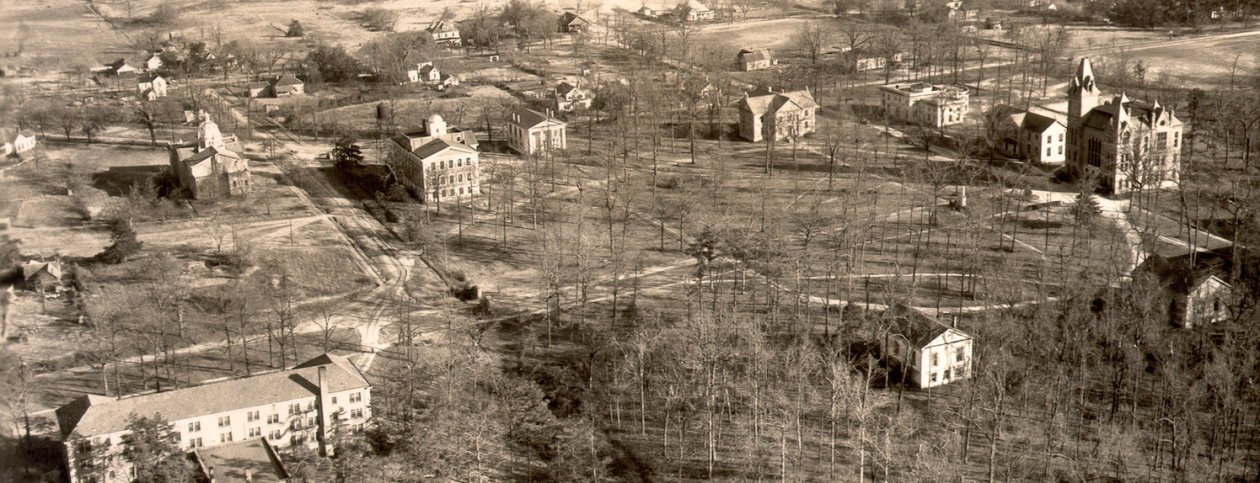


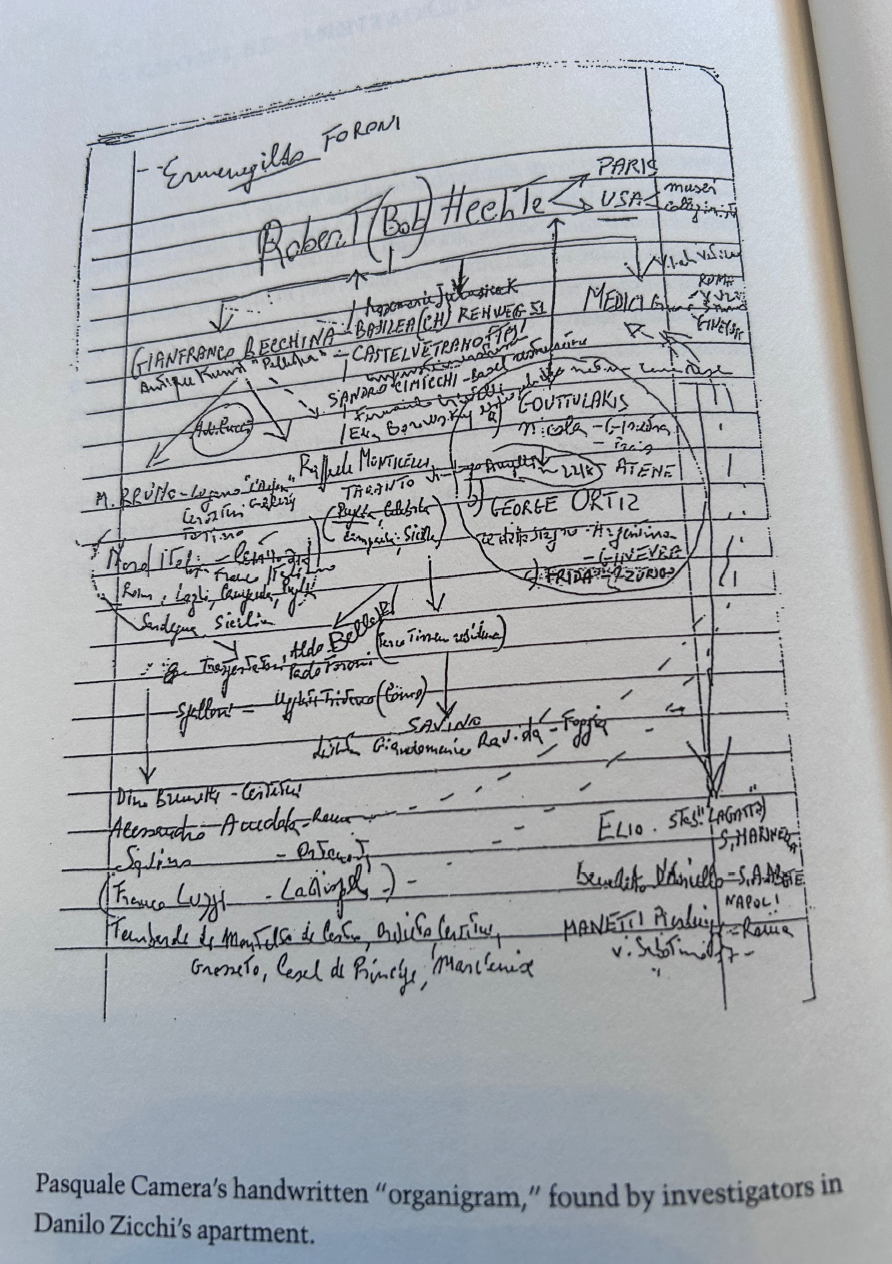

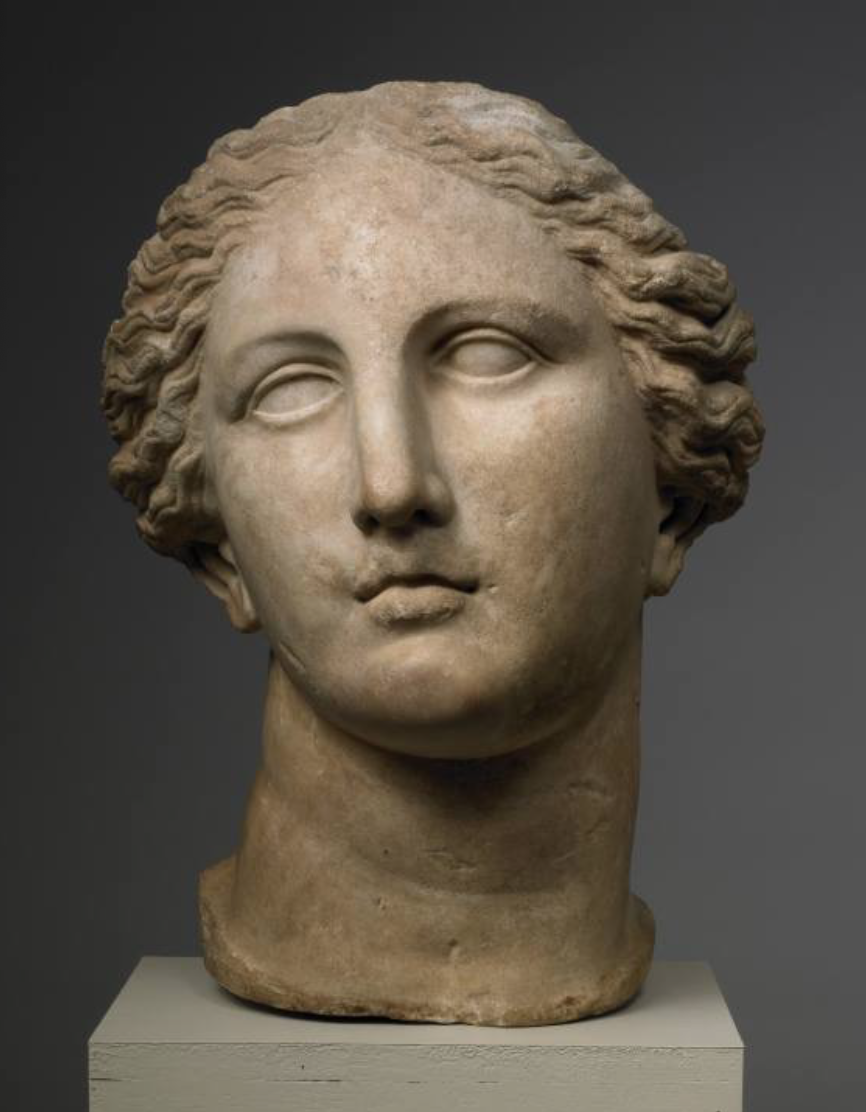


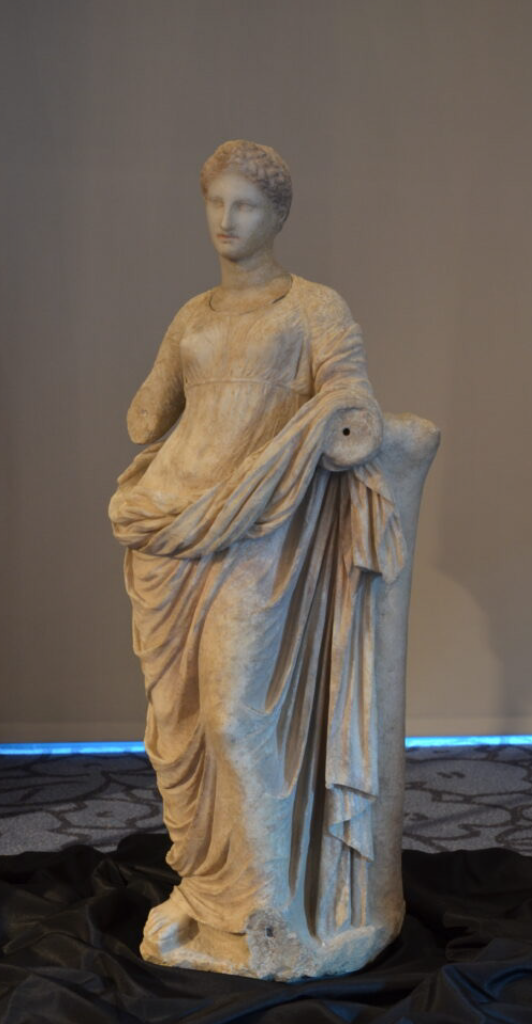
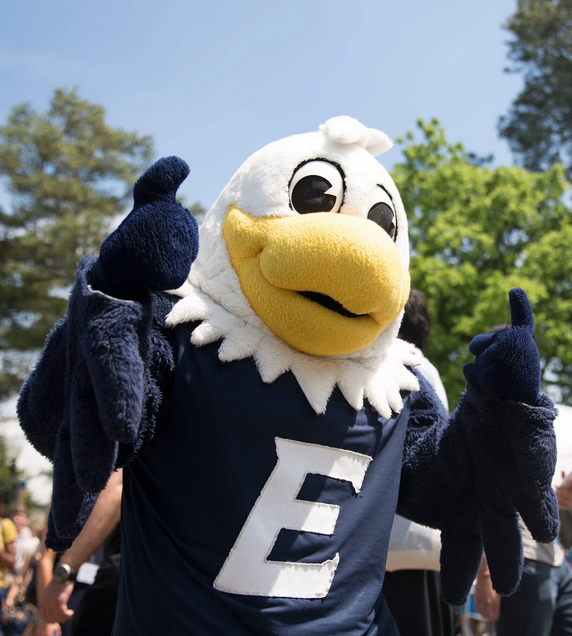



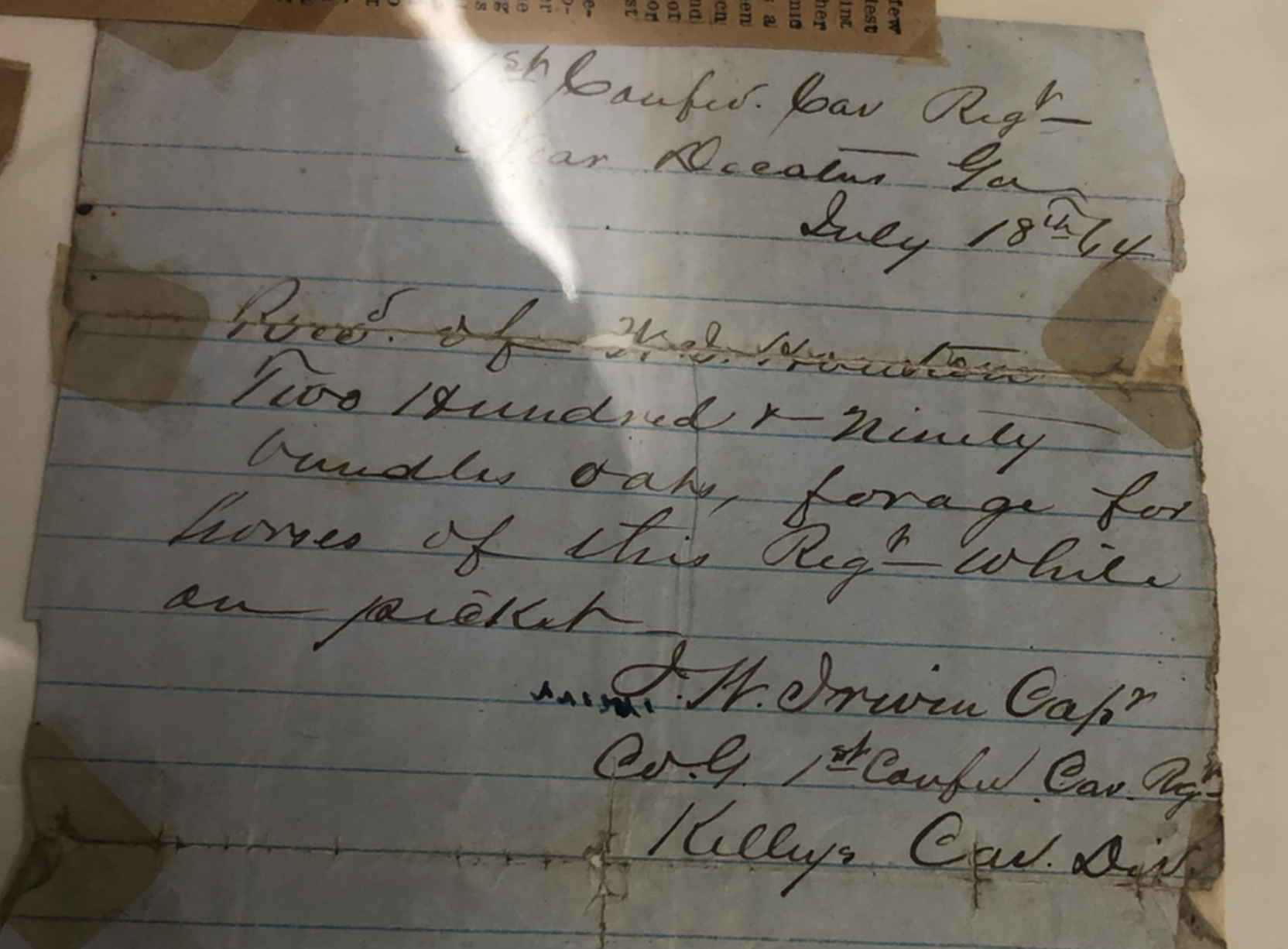

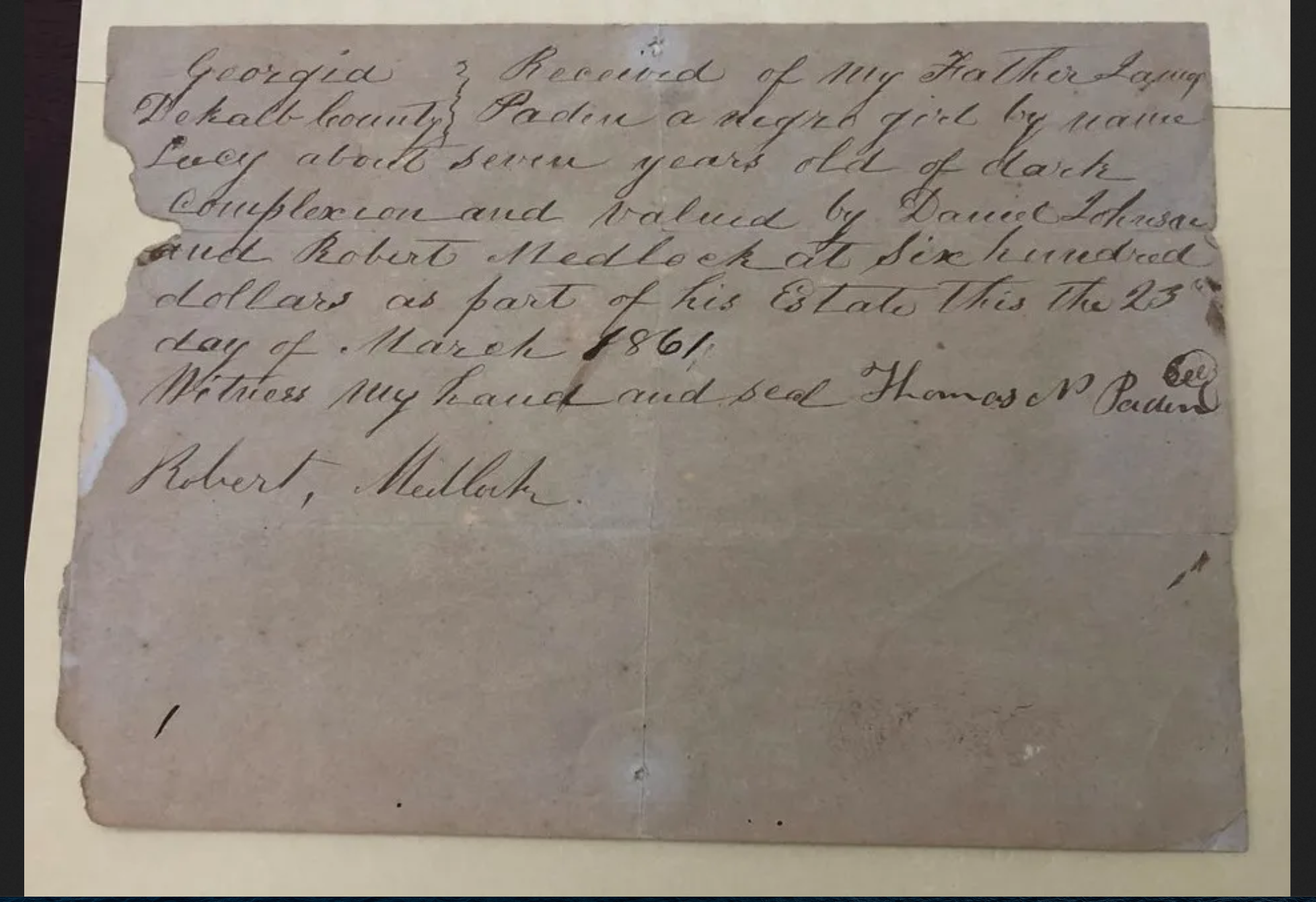


 Emory Historian's Blog

